

Eldoret City is entering the final stretch of preparations to host Kenya’s 63rd Mashujaa Day celebrations on October 20, 2026, with major investments in sporting infrastructure, affordable housing, modern markets, road networks, water projects, and electricity connectivity underscoring the Government’s development agenda across Uasin Gishu, Nandi, and Elgeyo-Marakwet counties. The celebrations, to be presided over by His Excellency President William Samoei Ruto at Kipchoge Keino Stadium, will be held under the theme “Security, Sports and the Finance Sector (The Economy),” highlighting the contribution of national stability, sporting excellence, financial inclusion, and productive investment to Kenya’s economic transformation.
The national commemoration comes amid an extensive Government development program in the North Rift, where investments exceeding KES 45 billion have been reported in affordable housing and market infrastructure across the region. These interventions are advancing the Bottom-Up Economic Transformation Agenda (BETA) through the expansion of housing opportunities, construction of modern trading facilities, development of sporting infrastructure, improved access to essential services, and the creation of economic opportunities for households, workers, traders, and entrepreneurs. In Uasin Gishu alone, the Pioneer Affordable Housing Project, Kidiwa housing developments, Eldoret Railway City, and Kimumu housing project represent a substantial pipeline of residential investments intended to accommodate the city’s growing population and stimulate construction-related economic activity.
The transformation is particularly significant to Eldoret, which attained city status in August 2024 and has continued to strengthen its position as a major commercial, agricultural, educational, and sporting center. The redevelopment of Kipchoge Keino Stadium into a modern facility with a planned capacity of 15,043 spectators, the development of the 64 Champions Modern Market, and investments in roads, water infrastructure, and electricity connectivity reflect the scale of public investment accompanying the city’s expanding economic responsibilities. These projects also provide tangible illustrations of the relationship between infrastructure development, enterprise growth, job creation, and improved public services under BETA.
Across the three host counties, the preparations have been integrated with a wider program of presidential development engagements involving the commissioning, launch, and inspection of projects in healthcare, technical education, housing, transport, and commercial infrastructure. The program includes the Kenya School of Technical and Vocational Education and Training’s Moiben Campus, Ziwa Dam II, the Sirikwa–Ziwa Machine Road, Ziwa Level Five Hospital, Kerita Dam rehabilitation, Kapseret Economic Stimulus Programme Market, and several housing and market developments in Nandi and Elgeyo-Marakwet. The projects illustrate the breadth of Government interventions being undertaken in the region and their relevance to the economic priorities highlighted during the national celebrations.
The preparations have also incorporated a KES 63 million allocation to sporting activities associated with Mashujaa Day, with football, volleyball, and athletics competitions organized across the host counties. The investment reflects the significance of sports to the North Rift economy, where athletic achievement has generated international recognition, supported livelihoods, attracted visitors, and established opportunities in coaching, training, hospitality, and related services. The sporting program will complement exhibitions, community engagements, and ceremonial activities leading to the main national celebration.
National Coordination and Measurable Infrastructure Readiness
The preparations are being coordinated through the National Steering Committee on Mashujaa Day Celebrations, chaired by the Principal Secretary, State Department for Internal Security and National Administration, Dr. Raymond Omollo. Working alongside national Government ministries, county administrations, security institutions, and technical agencies, the Committee has been monitoring the implementation of priority projects, assessing the preparedness of ceremonial facilities, and coordinating operational arrangements across Eldoret, Kapsabet, and Iten.
The Committee’s oversight has included inspections of Kipchoge Keino Stadium, road improvement works, Economic Stimulus Programme markets, and essential infrastructure intended to support the celebrations. The Government’s preparedness is reflected in several identifiable projects, investment commitments, and implementation milestones:
- Kipchoge Keino Stadium redevelopment — 15,043 planned spectator capacity and 75% construction progress: The redevelopment of Kipchoge Keino Stadium represents a major sporting infrastructure investment in Eldoret, with the facility being upgraded to accommodate approximately 15,043 spectators, an increase over its previous capacity of 9,248. The project is being implemented through the Ministry of Sports under the supervision of the Ministry of Defence, with Sinohydro Corporation identified among the contractors involved. Following the release of KES 300 million to accelerate reconstruction earlier in 2026, works have progressed on the spectator stands, seating installations, football pitch, athletics facilities, drainage, and associated infrastructure. As of October 16, Cabinet Secretary Salim Mvurya reported that construction had reached 75%, with an anticipated increase to approximately 80% as additional seating installations progressed. The Government has indicated that the stadium will be prepared to host the October 20 ceremony, while the remaining sporting infrastructure works, including the tartan track and completion of the playing surface, are scheduled to continue toward the end of December 2026. The facility is among 33 sports infrastructure projects being developed nationally, supporting the Government’s ambition to expand training opportunities, strengthen sports tourism, and prepare Kenya to host major international competitions.
- Affordable housing development — more than 6,700 planned units across four named Eldoret projects: The Government’s housing investments in Eldoret include the Pioneer Affordable Housing Project, previously reported 2,252 planned units; Kidiwa Phase One, comprising 220 units; Kidiwa Phase Two, comprising 1,800 units; and Eldoret Railway City, with 2,231 planned units. The Kimumu Affordable Housing Project adds another 226 units to the regional development pipeline. These projects form part of the national Affordable Housing Programme, which seeks to expand access to decent housing while generating employment in construction, building materials, manufacturing, transportation, and related industries. The Pioneer development has featured prominently in the presidential development itinerary associated with Mashujaa Day, while the wider housing portfolio demonstrates the Government’s investment in accommodating Eldoret’s urban growth and stimulating economic activity through construction and associated supply chains. The reported unit counts are project figures published at different stages of implementation and require reconciliation with the latest official delivery schedules before being presented as completed housing stock.
- 64 Champions Modern Market — major commercial infrastructure investment: The 64 Champions Modern Market in Eldoret is among the flagship trading infrastructure projects associated with the Government’s regional development program. Recent reporting has placed the wider market investment at approximately KES 6 billion, involving national and county Government participation. The facility is intended to provide modern commercial accommodation to traders operating within Eldoret’s expanding urban economy, with planned amenities including cold storage, improved sanitation, an ICT center, a social hall, a lactation room, and a children’s play area. The market has been designed to accommodate more than 1,000 traders, supporting the Government’s objective of improving working conditions, enhancing market organization, and facilitating the participation of small enterprises in formal commercial infrastructure. Its development is particularly relevant to BETA’s emphasis on strengthening micro, small, and medium enterprises, improving market access, and supporting income generation among traders and their households.
- Economic Stimulus Programme markets — targeted investments in local enterprise: The Government’s market development program extends to Kapseret, Kesses, and Matharu in Uasin Gishu, alongside Kapsabet, Kaiboi, Mosoriot, Kaptumo, and other commercial centers in Nandi County. These facilities are intended to provide structured trading spaces, improve sanitation, facilitate the handling and distribution of agricultural produce, and strengthen the operating environment for small businesses. In Nandi County, Government reporting has identified 15 modern and Economic Stimulus Programme markets under construction as part of a wider portfolio of housing and urban development investments. The market projects are expected to benefit farmers, produce vendors, retailers, transport operators, and other participants in the regional supply chain by improving the infrastructure through which goods reach consumers.
- Nandi County housing and institutional accommodation — KES 15.7 billion in reported project financing: The Affordable Housing Board has reported financing 24 projects valued at approximately KES 15.7 billion in Nandi County, encompassing residential housing, student accommodation, and commercial infrastructure. The county’s reported construction portfolio includes 2,685 affordable housing units, 4,680 student housing units, and 15 modern markets. Named institutional accommodation projects include the Kaiboi Polytechnic student village, planned to accommodate 1,020 students, and the Mosoriot Kenya Medical Training College student village, designed to accommodate 580 students. These investments are intended to improve accommodation conditions, support technical and professional education, generate construction employment, and stimulate demand for locally manufactured building materials and services.
- Water infrastructure — Ziwa Dam II and Kerita Dam rehabilitation: Water development forms part of the regional investment program associated with the presidential engagements preceding Mashujaa Day. In Uasin Gishu, the named projects include Ziwa Dam II and the rehabilitation and desilting of Kerita Dam in Kesses. The interventions are intended to strengthen water infrastructure and support communities whose livelihoods and economic activities depend on reliable access to water resources. Water investments contribute to agricultural productivity, household welfare, environmental management, and the resilience of local economies, reflecting BETA’s focus on strengthening productive sectors and improving essential infrastructure.
- Road connectivity — named projects linking communities and economic centers: The regional development program includes the Sirikwa–Ziwa Machine Road in Uasin Gishu, the Turbo–Kaiboi–Kimondi–Chepterit Road in Nandi, and the Kipkuldul–Kapyego–Kamalei Road in Elgeyo-Marakwet. Additional road interventions feature in the presidential development itinerary, including the Mugundoi–Nandi Hills/Kosiage–Cheptulu Road and the Timboroa–Seguton–Moringwo–Poror–Magrib–Sirwa–Lawina Ochi Road. These projects are intended to improve connectivity between communities, agricultural production areas, trading centers, and public institutions. Improved transport infrastructure supports the movement of agricultural produce, facilitates access to health and education services, and strengthens commercial linkages within the North Rift economy.
- Technical education and healthcare infrastructure — investment in human capital: The Kenya School of Technical and Vocational Education and Training’s Moiben Campus, Ziwa Level Five Hospital, Iten Kenya Medical Training College, and institutional developments at Koitalel Samoei University College form part of the wider development engagements associated with the celebrations. These projects reflect the Government’s emphasis on expanding technical skills, strengthening healthcare capacity, and improving access to education and professional training. Investment in technical and vocational education is particularly relevant to the employment and enterprise objectives of BETA, supporting the development of practical competencies required in construction, manufacturing, agriculture, technology, and other productive sectors.
- Mashujaa sporting activities — KES 63 million allocation: The Government has allocated KES 63 million to sporting activities associated with the celebrations, covering football, volleyball, and athletics competitions across the three host counties. The program has incorporated competitions beginning at the ward level, with the final stages scheduled around the national celebration period. These activities provide a platform for identifying talent, promoting participation, and recognizing the sporting heritage of the North Rift region. The investment also highlights the Government’s recognition of sports as an economic sector capable of generating employment, supporting entrepreneurship, attracting tourism, and expanding opportunities for young people.
The identified investments demonstrate the breadth of development activity accompanying the preparations, with projects at different stages of construction, commissioning, and implementation across the host counties. The National Steering Committee’s immediate responsibility remains the coordination of ceremonial readiness and essential public services, while the responsible implementing agencies continue overseeing the respective infrastructure and development programs.
Sports Development, Talent Empowerment, and the North Rift’s Economic Potential
The 2026 Mashujaa Day celebrations have placed renewed attention on the economic significance of sports, with Uasin Gishu, Nandi, and Elgeyo-Marakwet counties providing a compelling illustration of Kenya’s capacity to transform athletic talent into sustainable livelihoods, commercial opportunities, and international investment. Under the national theme, “Security, Sports and the Finance Sector (The Economy),” the Government’s sporting initiatives are aligned with the Bottom-Up Economic Transformation Agenda (BETA), particularly its emphasis on youth employment, enterprise development, infrastructure investment, and the expansion of productive economic opportunities.
The North Rift region occupies a distinguished position in Kenya’s sporting history, having produced generations of Olympic champions, world record holders, and internationally acclaimed athletes whose achievements have elevated the country’s global standing. Eldoret, Iten, Kapsabet, and surrounding training centers have established an internationally recognized athletics ecosystem encompassing professional training camps, coaching services, sports equipment businesses, hospitality establishments, transport providers, and enterprises serving athletes and visiting sporting delegations.
The region’s sporting achievements have also created opportunities within the international athletics economy, including professional competition earnings, sports sponsorships, training services, and tourism-related expenditure. The Government’s investment in sporting infrastructure and talent development is intended to strengthen this economic ecosystem, expand access to organized competition, and establish sustainable pathways through which young people can develop their abilities into professional careers.
The Mashujaa Day sporting program and associated investments encompass the following priority interventions:
- KES 63 million investment in the Mashujaa Day sporting program: The Government has allocated KES 63 million to facilitate football, volleyball, and athletics activities associated with the national celebrations across Uasin Gishu, Nandi, and Elgeyo-Marakwet counties. The program incorporates grassroots competitions, county-level participation, and activities leading to the national commemoration, creating opportunities for athletes and community teams to participate in organized sporting events. The allocation supports the logistical and organizational requirements of the competitions, including the coordination of participating teams, officials, and designated venues. Through this investment, the Government is promoting community participation, encouraging talent identification, and strengthening the relationship between organized sports and youth development.
- Football development and grassroots participation in Uasin Gishu: Uasin Gishu County has been designated to host football activities within the Mashujaa Day sporting program, providing a platform for community teams and emerging players to demonstrate their abilities through organized competition. Football remains an important avenue for youth engagement, community cohesion, and the development of professional sporting careers. The county’s participation creates opportunities to strengthen the visibility of grassroots teams, encourage structured competition, and promote interaction among players, coaches, sports administrators, and local communities. The activities also generate demand for transport, food services, sporting equipment, and other supplies associated with the organization of competitive events.
- Volleyball competitions and talent development in Nandi County: Nandi County’s participation through volleyball competitions recognizes the importance of organized team sports in nurturing athletic ability, strengthening discipline, and creating opportunities for young people. The competitions provide a platform for participating teams to gain competitive experience and attract attention to the potential of grassroots volleyball development. Through structured sporting activities, players can develop technical skills, teamwork, and competitive experience relevant to progression into institutional, national, and professional sporting programs. The involvement of schools, community teams, coaches, and local sports administrators contributes to the development of a sporting environment capable of supporting sustained participation.
- Athletics and marathon activities in Elgeyo-Marakwet County: Elgeyo-Marakwet County, internationally recognized through the athletics training environment surrounding Iten, has been designated to host marathon activities associated with the celebrations. The county’s high-altitude training conditions and established athletics infrastructure have attracted Kenyan and international runners seeking professional training opportunities. Marathon activities provide a platform to celebrate this heritage, promote competitive participation, and highlight the commercial potential of sports tourism. The presence of training camps, accommodation establishments, coaching services, and businesses serving athletes demonstrates how sporting excellence contributes to local economic activity. The Mashujaa Day program offers an opportunity to showcase these economic linkages while encouraging emerging athletes to pursue structured training and professional development.
- Development of Kipchoge Keino Stadium and the national sports infrastructure program: The redevelopment of Kipchoge Keino Stadium forms part of the Government’s investment in modern sporting facilities, with the Eldoret project designed to accommodate 15,043 spectators upon completion. The facility is included in the wider national portfolio of 33 sports infrastructure projects being developed to strengthen Kenya’s capacity to host competitions, support athlete training, and expand opportunities within the sports industry. Its planned facilities, including the athletics track, football pitch, spectator stands, and supporting infrastructure, are intended to accommodate organized sporting activities and improve the quality of the competitive environment. The project also contributes to Kenya’s preparations to host the 2027 Africa Cup of Nations through the wider national stadium development program.
- Sports tourism and the commercial potential of high-altitude training: The North Rift’s established reputation as an international athletics destination provides opportunities for investment in training facilities, accommodation, sports medicine, physiotherapy, nutrition services, coaching, and specialized equipment supply. Eldoret and Iten have attracted athletes seeking high-altitude training, creating commercial demand within hospitality and related service industries. Investment in sporting facilities, urban infrastructure, and regional connectivity can strengthen the ability of local enterprises to serve this market and support the development of professional services associated with athletic performance. These opportunities are particularly relevant to BETA’s objective of expanding income-generating activities and supporting the growth of micro, small, and medium enterprises.
- Sports financing, professional development, and economic empowerment: The inclusion of the finance sector within the national theme draws attention to the importance of financial literacy, access to investment products, enterprise financing, and responsible management of sporting income. Professional athletes operate within an economic environment involving competition earnings, sponsorship agreements, training expenses, travel costs, and long-term financial planning. Access to appropriate financial services can support athletes in managing their income, investing in productive enterprises, and developing sustainable livelihoods throughout their sporting careers. Financial institutions, sports administrators, and enterprise development agencies have an opportunity to strengthen awareness of savings, investment, insurance, and entrepreneurship among athletes and emerging sporting professionals.
- Sports-related employment and local enterprise opportunities: The development of sporting infrastructure and the organization of competitive events generate economic activity across construction, facility maintenance, event management, hospitality, transportation, security, catering, media production, and equipment supply. Local enterprises can participate in these activities through the provision of goods and services required by athletes, spectators, event organizers, and visiting delegations. The development of a sustainable sports economy also requires investment in technical skills, including coaching, officiating, sports administration, physiotherapy, facility management, and digital media production. These occupations provide pathways through which sporting activity can contribute to employment creation and enterprise development within the host counties.
The sporting activities associated with Mashujaa Day are taking place within a region whose athletic achievements have established a foundation for continued investment in sports infrastructure, professional training, and related commercial services. The Government’s interventions seek to strengthen this foundation through modern facilities, organized competition, and economic opportunities that support the development of sporting talent and the livelihoods connected to the industry.
Financial Inclusion, Enterprise Development, and Economic Opportunities Across the Host Counties
The inclusion of the finance sector in the 2026 Mashujaa Day theme, “Security, Sports and the Finance Sector (The Economy),” brings into focus the Government’s efforts to expand access to affordable credit, strengthen financial inclusion, support micro, small, and medium enterprises (MSMEs), and mobilize investment toward productive economic activities. Across Uasin Gishu, Nandi, and Elgeyo-Marakwet counties, these priorities are particularly significant to farmers, traders, young entrepreneurs, women-led enterprises, artisans, and small businesses whose economic activities contribute substantially to employment, household incomes, and regional productivity.
The Bottom-Up Economic Transformation Agenda (BETA) identifies access to finance as an important enabler of enterprise growth, agricultural productivity, and economic participation. Through interventions such as the Financial Inclusion Fund, commonly known as the Hustler Fund, the Credit Guarantee Scheme, and the Kenya Development Corporation’s enterprise financing initiatives, the Government has established mechanisms intended to address financing constraints affecting businesses and individuals operating within the productive sectors of the economy. These interventions complement investments in modern markets, affordable housing, transport infrastructure, agricultural value chains, and technical education, creating opportunities for enterprises to access capital and participate in expanding economic activities.
The North Rift region provides an important setting for examining the relationship between financial services and economic transformation. Uasin Gishu’s commercial and agricultural economy, Nandi’s tea and dairy production, and Elgeyo-Marakwet’s agricultural and sporting enterprises depend on access to financial products that support investment, working capital, equipment acquisition, business expansion, and household financial resilience. The national celebrations consequently provide a platform to highlight the role of financial institutions, Government financing programs, and enterprise development agencies in strengthening the economic capabilities of communities across the three counties.
The Government’s financial inclusion and enterprise development interventions encompass the following areas:
- Financial Inclusion Fund (Hustler Fund) — expanding access to affordable digital credit: The Hustler Fund was established in November 2022 to provide accessible credit to individuals and enterprises that have historically experienced difficulties obtaining financing through conventional lending channels. Its personal loan product has offered digital loans ranging from KES 500 to KES 50,000, subject to individual eligibility and applicable lending conditions, with a stated annual interest rate of 8%. The program incorporates a savings component intended to encourage financial discipline and long-term financial security among borrowers. The Fund has subsequently introduced additional financing products targeting groups and enterprises, broadening its role in supporting income-generating activities. Within the North Rift, such financing mechanisms are relevant to small-scale traders, agricultural service providers, transport operators, artisans, and entrepreneurs requiring working capital to sustain and expand their businesses.
- Credit Guarantee Scheme — improving MSME access to formal lending: The Government’s Credit Guarantee Scheme provides a risk-sharing mechanism intended to encourage participating financial institutions to extend credit to eligible micro, small, and medium enterprises. By partially guaranteeing qualifying loans, the scheme seeks to address financing constraints associated with collateral requirements and perceived lending risks. This intervention is relevant to enterprises operating in agriculture, manufacturing, retail trade, hospitality, and other productive sectors represented within the host counties. Access to formal credit can support investment in equipment, expansion of business premises, acquisition of stock, and the development of commercial activities that generate employment and strengthen local supply chains.
- Modern markets and the economic empowerment of small traders: The development of the 64 Champions Modern Market in Eldoret and Economic Stimulus Programme markets across Uasin Gishu and Nandi counties is intended to improve the physical infrastructure supporting small-scale commerce. Modern trading facilities provide opportunities to strengthen business organization, improve product handling, enhance sanitation, and facilitate the delivery of financial and digital services to traders. The provision of structured commercial spaces can also support the formalization of enterprise activities, enabling eligible businesses to establish financial records, access banking services, and pursue financing arrangements suited to their operations. These investments are particularly significant to women and young people engaged in retail trade, agricultural produce marketing, food services, and other small enterprises.
- Agricultural financing and productive investment in the North Rift economy: Agriculture remains a major economic activity across the three host counties, with farmers and agribusiness enterprises participating in maize production, dairy farming, tea cultivation, horticulture, and livestock-related activities. The availability of appropriate financial services is essential to the acquisition of agricultural inputs, investment in irrigation and mechanization, expansion of processing capacity, and development of storage and distribution infrastructure. Institutions such as the Agricultural Finance Corporation and participating commercial financial institutions have roles in supporting eligible agricultural enterprises through financing products suited to their investment requirements. The Government’s wider interventions in roads, water infrastructure, markets, and agricultural value chains contribute to the operating environment within which these financing mechanisms can support productivity and commercial expansion.
- Affordable housing financing and construction-sector opportunities: The Government’s Affordable Housing Programme has generated opportunities for financial institutions, contractors, manufacturers, suppliers, and workers participating in residential development. Projects such as Pioneer Affordable Housing, Kidiwa, Kimumu, and Eldoret Railway City form part of a housing investment pipeline intended to expand residential accommodation and stimulate economic activity within Eldoret. The financing requirements associated with affordable housing include construction capital, mortgage products, tenant purchase arrangements, and financing mechanisms that enable eligible households to access residential units. Construction activities also generate demand for locally supplied materials, transportation services, technical labor, and other inputs, creating opportunities for enterprises operating within the regional economy.
- Youth enterprise financing and technical skills development: The Government’s youth economic empowerment initiatives seek to improve access to enterprise opportunities, employability skills, and financial services among young people. Programs such as the National Youth Opportunities Towards Advancement (NYOTA) Project incorporate interventions intended to strengthen employability, support entrepreneurship, and improve access to income-generating opportunities among eligible beneficiaries. The project’s business support components include entrepreneurship training, mentorship, and start-up capital arrangements subject to program eligibility and implementation requirements. These interventions are relevant to young people pursuing opportunities in agriculture, retail trade, digital services, construction, hospitality, and sports-related enterprises. Their effectiveness depends on the development of practical business capabilities, appropriate financial management, and access to markets.
- Women’s economic empowerment and access to enterprise financing: Women-led enterprises constitute an important component of the North Rift economy, particularly within agricultural trade, retail commerce, hospitality, food processing, and household-based businesses. Government financing mechanisms, including the Women Enterprise Fund and the Uwezo Fund, provide avenues through which eligible women and organized groups can access financial support for enterprise activities. These programs seek to strengthen economic participation, facilitate business development, and improve the capacity of beneficiaries to generate sustainable household incomes. Investments in modern markets and commercial infrastructure complement these financing initiatives by providing improved trading environments and opportunities to expand business operations.
- Digital financial services and the formalization of economic activity: Kenya’s established mobile money ecosystem provides an important foundation for expanding access to financial services among individuals and businesses operating across the host counties. Digital payments, mobile banking, electronic savings products, and technology-enabled lending platforms have created opportunities for enterprises to conduct transactions, maintain financial records, and access financial products. The Government’s financial inclusion agenda recognizes the importance of digital infrastructure and financial literacy in supporting responsible participation within the financial system. For small businesses, the adoption of appropriate digital tools can improve transaction management, strengthen recordkeeping, and support access to financial services aligned with their operating requirements.
- Investment opportunities associated with the Mashujaa Day celebrations: The concentration of sporting activities, exhibitions, official engagements, and visitors across the host counties creates opportunities for businesses operating in hospitality, transport, catering, retail trade, accommodation, and event-related services. Enterprises supplying goods and services to participating institutions and visitors may experience increased commercial activity during the celebrations, generating income opportunities within local supply chains. Financial institutions and enterprise development agencies can support eligible businesses through working capital facilities, digital payment solutions, savings products, and financial advisory services. These opportunities illustrate the practical relationship between national events, enterprise activity, and the financial services required to support commercial participation.
The financial inclusion agenda associated with this year’s Mashujaa Day theme reflects the Government’s commitment to strengthening the productive capacity of households and enterprises through accessible financial services, improved commercial infrastructure, and investment in economic opportunities. Across Uasin Gishu, Nandi, and Elgeyo-Marakwet counties, the integration of financial services with agriculture, sports, housing, trade, and infrastructure development remains an important component of the economic transformation priorities being implemented under BETA.
Security Sector Investments, Public Safety, and Operational Readiness Ahead of Mashujaa Day
The Government’s preparations for the 63rd Mashujaa Day celebrations have incorporated extensive security coordination across Uasin Gishu, Nandi, and Elgeyo-Marakwet counties, with national security institutions, administrative structures, and emergency response agencies working to facilitate the peaceful conduct of the presidential ceremony and associated regional activities. The national celebration at Kipchoge Keino Stadium will require coordinated operations involving the National Police Service, Kenya Defence Forces, National Government Administration Officers, emergency medical teams, and other institutions responsible for public safety, ceremonial security, and the protection of critical infrastructure.
Security occupies a prominent position within this year’s Mashujaa Day theme, “Security, Sports and the Finance Sector (The Economy),” reflecting its importance to economic productivity, investor confidence, public service delivery, and the protection of livelihoods. Under the Bottom-Up Economic Transformation Agenda (BETA), a stable security environment supports agricultural production, commercial investment, transportation, tourism, and the operation of enterprises across the economy. The North Rift region, with its extensive agricultural activities, strategic transport corridors, educational institutions, and expanding urban centers, provides an important setting for demonstrating the relationship between effective security administration and sustainable economic development.
The security preparations are being coordinated within the wider national planning framework overseen by the Principal Secretary, State Department for Internal Security and National Administration, Dr. Raymond Omollo, working alongside the relevant security leadership and county administrative structures. The operational arrangements encompass security at the principal ceremonial venue, the management of public gatherings, traffic coordination, emergency response preparedness, and the facilitation of activities taking place across the three host counties.
The priority areas of security preparedness and institutional investment include:
- National Police Service operational preparedness and interagency coordination: The National Police Service has a statutory responsibility to maintain law and order, protect life and property, prevent crime, and facilitate public safety during major national events. Preparations for Mashujaa Day require the coordination of police formations, traffic officers, specialized units, and county security structures to support operations within Eldoret and the surrounding region. These responsibilities encompass public order management, the regulation of movement around designated venues, the protection of public facilities, and coordination with institutions responsible for emergency response. The deployment and management of security personnel are undertaken through the appropriate command structures, with operational arrangements aligned to the requirements of the national ceremony and complementary activities.
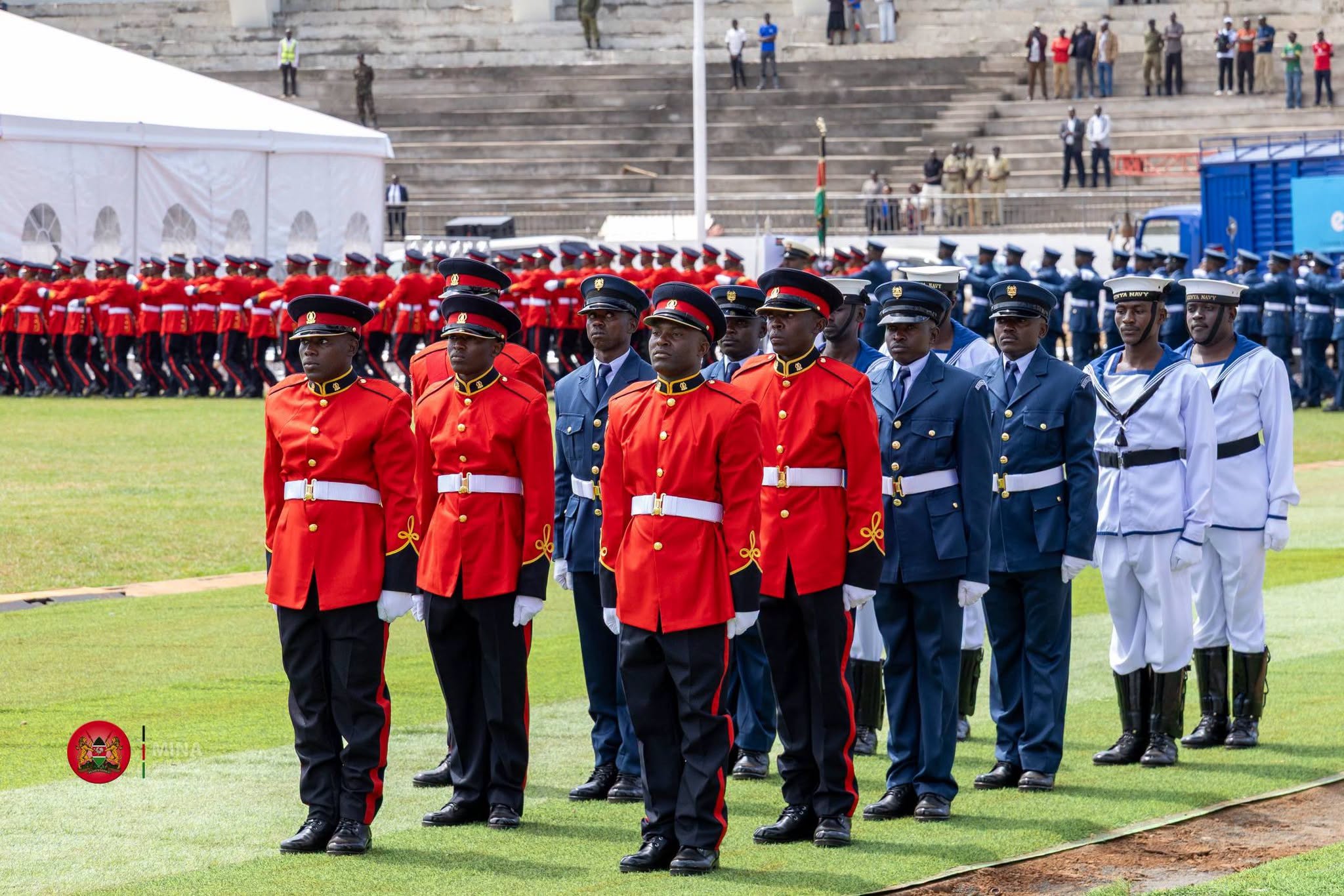
- Kenya Defence Forces ceremonial preparations and national military honors: The Kenya Defence Forces have been undertaking ceremonial preparations at Kipchoge Keino Stadium, including full-dress rehearsals intended to refine the execution of military parades, ceremonial formations, and presidential honors. These exercises require coordination among participating military units, ceremonial commanders, technical personnel, and event organizers responsible for the sequence of official proceedings. The rehearsals provide an opportunity to assess the timing, positioning, and coordination of participating formations within the stadium environment. The involvement of the Kenya Defence Forces reflects the ceremonial significance of Mashujaa Day as a national occasion recognizing the sacrifices and contributions of individuals who have served Kenya through acts of courage, patriotism, and public service.
- National Government Administration Officers and grassroots security coordination: The National Government Administration Officers structure provides an established institutional framework for coordinating Government activities and public engagement across counties, sub-counties, divisions, locations, and sub-locations. Within the host counties, County Commissioners, Deputy County Commissioners, Assistant County Commissioners, Chiefs, and Assistant Chiefs have responsibilities supporting administrative coordination, public communication, and the maintenance of public order. Their involvement is particularly important in facilitating the dissemination of official information, coordinating community participation, and addressing local administrative requirements associated with the celebrations. These structures also contribute to the implementation of Government programs and the coordination of public services across the region.
- Kipchoge Keino Stadium security and spectator management: The principal ceremonial venue requires comprehensive arrangements covering controlled access, public screening, accreditation, designated seating areas, pedestrian movement, and emergency access. The stadium’s planned capacity of 15,043 spectators provides an indication of the scale of infrastructure being developed, although the number of attendees permitted during the national ceremony will depend on the facilities cleared for event use and the applicable safety requirements. Security agencies and event organizers are responsible for coordinating arrangements that facilitate orderly admission, protect restricted areas, and support the movement of authorized personnel and members of the public. These requirements also involve coordination with medical responders, technical service providers, and ceremonial teams operating within the venue.
- Traffic management and the protection of strategic transport corridors: Eldoret’s position as a major transport and commercial hub requires effective traffic coordination during the celebrations, particularly along roads serving Kipchoge Keino Stadium, the central business district, transport terminals, and routes connecting the city to neighboring counties. Traffic management responsibilities include regulating vehicular movement, facilitating the transportation of official delegations, maintaining emergency access, and communicating applicable traffic arrangements to motorists and public service vehicle operators. The regional road network also supports agricultural transportation and commercial distribution, making the management of mobility important to the continuity of economic activities during the national event.
- Emergency medical response and public health preparedness: The expected attendance at the celebrations necessitates coordinated medical preparedness involving county health departments, healthcare facilities, ambulance service providers, and emergency response personnel. Uasin Gishu County is served by Moi Teaching and Referral Hospital in Eldoret, a major national referral and teaching institution whose specialized healthcare services form an important component of the region’s medical infrastructure. The wider regional health system also includes county and sub-county hospitals responsible for emergency treatment, patient stabilization, and referral services. Event-specific medical planning requires coordination of first aid services, ambulance access, emergency communication, and appropriate referral arrangements to facilitate timely assistance to attendees requiring medical attention.
- Fire safety, disaster response, and essential infrastructure protection: The operation of a major national ceremony requires preparedness for emergencies associated with public gatherings, temporary installations, electrical systems, transport activities, and the use of public facilities. Relevant county departments, emergency service providers, security agencies, and technical teams have responsibilities covering fire prevention, emergency access, incident response, and the protection of essential installations. The coordination of these functions is important to maintaining operational continuity at the stadium and other designated venues. Public utilities, communication facilities, transport infrastructure, and healthcare institutions also require appropriate safeguards to support the delivery of essential services during the celebrations.
- Security coordination across regional sporting and exhibition venues: The Mashujaa Day program extends to football activities in Uasin Gishu, volleyball competitions in Nandi, marathon events in Elgeyo-Marakwet, and exhibitions at Eldoret National Polytechnic. These activities require security arrangements suited to their respective venues, attendance patterns, and operational requirements. County security structures and event organizers have responsibilities covering public order, spectator movement, traffic coordination, and the protection of participants and facilities. The involvement of administrative and security institutions across the three counties supports the implementation of the regional program and facilitates public participation in the activities preceding the main national ceremony.
- Security sector modernization and the economic transformation agenda: The Government’s wider security sector priorities include strengthening institutional capacity, improving coordination among security agencies, modernizing operational infrastructure, and enhancing the effectiveness of public safety services. These interventions are relevant to the North Rift economy, where agricultural production, transport logistics, manufacturing, hospitality, and commercial activities depend on a secure operating environment. Effective security administration contributes to the protection of investments, continuity of business operations, movement of goods, and the confidence required to expand productive economic activities. The prominence of security within the 2026 Mashujaa Day theme reflects its contribution to the implementation of BETA and the wider national development agenda.
The security institutions and participating administrative structures continue to coordinate operational requirements ahead of the October 20 celebrations, with attention directed toward the preparedness of personnel, the management of public movement, the functionality of emergency response services, and the safety of participants across the host counties.
Agricultural Transformation, Value Addition, and Regional Economic Development
The hosting of the 63rd Mashujaa Day celebrations across Uasin Gishu, Nandi, and Elgeyo-Marakwet counties places Kenya’s agricultural economy within the national spotlight, with the North Rift region playing a significant role in food production, livestock farming, agro-processing, and the supply of agricultural commodities to markets across the country. The Government’s development interventions in the region reflect the agricultural transformation priorities of the Bottom-Up Economic Transformation Agenda (BETA), which seeks to improve productivity, strengthen value chains, expand access to markets, and increase incomes among farmers and enterprises participating in the agricultural economy.
Uasin Gishu County occupies a prominent position in Kenya’s maize and dairy production, with its agricultural activities supporting food supply, employment, transportation, storage, processing, and commercial trade. Nandi County contributes significantly to the tea and dairy industries, while Elgeyo-Marakwet County supports diversified agricultural production encompassing cereals, horticulture, livestock farming, and irrigation-based activities. These economic characteristics provide an important foundation for investments in agricultural infrastructure, affordable financing, mechanization, value addition, and improved connectivity between production areas and commercial markets.
The Government’s agricultural transformation agenda is being implemented through interventions involving fertilizer subsidies, agricultural credit, irrigation development, water infrastructure, farmer organization, and the construction of modern trading facilities. Across the host counties, these programs are intended to address production constraints, improve access to essential agricultural inputs, and strengthen the capacity of farmers and agribusiness enterprises to participate in profitable value chains.
The principal interventions and development opportunities include:
- Fertilizer subsidy program and agricultural input accessibility: The Government’s fertilizer subsidy program remains a major intervention under BETA, aimed at reducing production costs and improving access to agricultural inputs among eligible farmers. Through the National Cereals and Produce Board (NCPB) and designated distribution arrangements, subsidized fertilizer has been made available to registered farmers at a Government-supported price of KES 2,100 per 50-kilogram bag under the program’s established pricing framework. The intervention is particularly significant to maize-producing areas of Uasin Gishu and neighboring counties, where fertilizer expenditure constitutes an important component of production costs. The program is intended to support increased agricultural productivity, improve farmers’ ability to cultivate their land, and strengthen national food security through more accessible farm inputs.
- Maize production, grain handling, and food security in Uasin Gishu: Uasin Gishu’s agricultural economy is closely associated with large-scale and smallholder maize production, supported by an established network of farmers, agricultural service providers, grain traders, transport operators, and storage facilities. The National Cereals and Produce Board maintains an important institutional presence within the region through grain handling and storage infrastructure, including facilities serving the Eldoret agricultural economy. Government interventions involving agricultural inputs, grain storage, market access, and transport connectivity are intended to support the efficiency of maize production and distribution. Investment in modern agricultural infrastructure can contribute to reduced post-harvest losses, improved handling of harvested grain, and the development of commercial opportunities within the wider cereals value chain.
- Tea production and value chain development in Nandi County: Nandi County’s tea industry supports the livelihoods of numerous smallholder farmers, workers, transport operators, and enterprises participating in tea production, processing, and distribution. The county’s agricultural economy includes tea-growing areas around Nandi Hills, Kapsabet, and surrounding production zones, where the availability of reliable transport infrastructure, agricultural services, and processing capacity influences the movement of harvested produce. Government interventions in road connectivity, agricultural financing, and market infrastructure contribute to the operating environment required by farmers and tea-related enterprises. The development of value addition and improved marketing arrangements also presents opportunities to strengthen earnings within the tea industry and expand participation in downstream commercial activities.
- Dairy production, processing, and livestock enterprise development: Dairy farming is an important source of household income across Uasin Gishu and Nandi counties, supporting milk production, animal feed businesses, veterinary services, transport operations, and dairy processing enterprises. The sector’s productivity depends on access to quality animal feeds, veterinary services, reliable water supplies, breeding services, and appropriate milk handling infrastructure. Government initiatives supporting livestock development, agricultural financing, and rural infrastructure are relevant to strengthening the dairy value chain. Investments in milk collection, cooling, processing, and distribution facilities can improve product handling, facilitate access to formal markets, and create opportunities for enterprises engaged in value addition and related services.
- Water infrastructure and agricultural resilience — Ziwa Dam II and Kerita Dam rehabilitation: The development of Ziwa Dam II and the rehabilitation and desilting of Kerita Dam in Uasin Gishu form part of the regional water infrastructure interventions associated with the Government’s development program. These projects are relevant to the management of water resources and the provision of infrastructure capable of supporting surrounding communities and productive activities. Reliable water infrastructure contributes to agricultural resilience, livestock production, household welfare, and the sustainability of local economic activities. The rehabilitation of existing water facilities also supports the restoration of infrastructure functionality and the management of water resources within the affected areas.
- Irrigation development and agricultural diversification in Elgeyo-Marakwet: Elgeyo-Marakwet County possesses agricultural potential across its highland and valley environments, with opportunities for horticulture, cereals, livestock production, and irrigation-supported farming. The Kerio Valley provides an important setting for agricultural diversification, particularly where reliable water infrastructure can support productive cultivation. Government investments in water development, agricultural infrastructure, and road connectivity are relevant to improving the operating conditions of farmers and enterprises participating in these activities. Irrigation development can contribute to increased production cycles, diversification into higher-value crops, and improved household incomes where projects are supported by appropriate technical management and access to markets.
- Modern markets and agricultural commercialization: The development of the 64 Champions Modern Market in Eldoret and Economic Stimulus Programme markets across the host counties provides an opportunity to strengthen agricultural trade and the distribution of farm produce. Modern trading facilities can improve sanitation, facilitate organized commercial activity, and provide infrastructure for the handling and marketing of agricultural products. The inclusion of cold storage and other support facilities within appropriate market developments is particularly relevant to horticulture, dairy products, and other perishable commodities. These investments can support traders, farmers, transport operators, and small enterprises participating in the agricultural supply chain, while improving the commercial infrastructure available within growing urban centers.
- Agricultural financing, mechanization, and enterprise growth: Access to affordable financing remains an important requirement for farmers seeking to invest in machinery, irrigation equipment, storage facilities, livestock development, and agricultural processing. The Agricultural Finance Corporation and participating financial institutions provide financing mechanisms intended to support eligible agricultural enterprises. Within the framework of BETA, agricultural financing complements investments in infrastructure and input support by enabling farmers and agribusinesses to acquire productive assets and expand their operations. Mechanization also presents opportunities for service providers offering land preparation, planting, harvesting, transportation, and equipment maintenance services, contributing to employment and enterprise development within rural economies.
- Road development and agricultural market connectivity: The Sirikwa–Ziwa Machine Road in Uasin Gishu, the Turbo–Kaiboi–Kimondi–Chepterit Road in Nandi, and the Kipkuldul–Kapyego–Kamalei Road in Elgeyo-Marakwet are among the named infrastructure projects associated with the Government’s regional development program. Improved road connectivity supports the transportation of agricultural inputs, harvested produce, livestock products, and manufactured goods between rural production areas and commercial centers. These investments are relevant to the efficiency of agricultural supply chains, access to processing facilities, and the ability of farmers to reach markets. Road infrastructure also facilitates access to healthcare, education, financial services, and other institutions supporting economic participation within rural communities.
The agricultural transformation initiatives across the host counties reflect the Government’s focus on strengthening food production, supporting farmers, expanding value addition, and improving the infrastructure required by the regional economy. The North Rift’s agricultural contribution provides an important dimension to the 2026 Mashujaa Day celebrations, highlighting the role of productive investment, enterprise development, and essential public services in advancing Kenya’s economic transformation agenda.
Healthcare, Technical Education, and Human Capital Development Across the Host Counties
The Government’s development program accompanying the 2026 Mashujaa Day celebrations includes investments in healthcare facilities, technical training institutions, and student accommodation across Uasin Gishu, Nandi, and Elgeyo-Marakwet counties. These interventions support the human capital development priorities of the Bottom-Up Economic Transformation Agenda (BETA), particularly the expansion of accessible healthcare, the development of practical workforce skills, and the improvement of infrastructure serving students and communities.
The regional investment program includes named projects at Ziwa Level Five Hospital, the Kenya School of Technical and Vocational Education and Training’s Moiben Campus, Iten Kenya Medical Training College, Koitalel Samoei University College, and student accommodation developments at Kaiboi Polytechnic and Mosoriot Kenya Medical Training College. Together, these institutions serve different components of the regional economy, including healthcare delivery, professional training, technical education, and the preparation of young people to participate in productive employment.
Priority healthcare and education investments
- Ziwa Level Five Hospital — strengthening healthcare infrastructure in Uasin Gishu: The development of Ziwa Level Five Hospital forms part of the Government’s regional healthcare investment program associated with the presidential engagements preceding Mashujaa Day. The project is intended to expand healthcare infrastructure serving Ziwa and surrounding communities, supporting the development of services within the county’s referral and treatment network. Its significance extends to the accessibility of healthcare among communities whose livelihoods depend on agriculture, trade, and other economic activities. The facility’s operational contribution will depend on the completion of the relevant infrastructure, staffing, equipment installation, and commissioning arrangements.
- Moi Teaching and Referral Hospital — regional specialized healthcare capacity: Eldoret hosts Moi Teaching and Referral Hospital, one of Kenya’s principal national referral and teaching hospitals, serving patients across the North Rift and neighboring regions. The hospital provides specialized clinical services and supports the training of healthcare professionals, making it an important institution within the regional health system. Its presence contributes to the availability of advanced medical services, professional employment, medical education, and associated economic activity. The institution also forms part of the wider healthcare capacity available within Eldoret during major national events.
- Kenya School of Technical and Vocational Education and Training, Moiben Campus: The Moiben Campus project is among the named technical education investments included in the Government’s regional development engagements. Technical and vocational education supports the preparation of instructors, trainers, and skilled personnel required to strengthen the delivery of competency-based training. Investment in institutional infrastructure contributes to the development of training capacity and the availability of practical learning environments. These priorities are relevant to the workforce requirements of construction, manufacturing, agriculture, electrical installation, automotive services, information technology, and other productive sectors.
- Kaiboi Polytechnic student accommodation — 1,020 planned spaces: The student village development associated with Kaiboi Polytechnic in Nandi County has been identified as a project designed to accommodate approximately 1,020 students. The investment addresses the infrastructure requirements associated with expanding access to technical education and improving the residential environment available to learners. Student accommodation projects also create demand for construction materials, skilled labor, transport services, and local suppliers during implementation, while supporting economic activity around educational institutions once operational.
- Mosoriot Kenya Medical Training College student village — 580 planned spaces: The student accommodation project at Mosoriot Kenya Medical Training College is designed to provide approximately 580 residential spaces. The development supports the infrastructure needs of an institution involved in preparing healthcare professionals, including personnel required within hospitals, health centers, and community healthcare services. Adequate student accommodation contributes to the learning environment and supports the capacity of training institutions to serve enrolled students. The project also forms part of the wider institutional housing investments being undertaken in Nandi County.
- Iten Kenya Medical Training College — healthcare workforce development in Elgeyo-Marakwet: The development program associated with Mashujaa Day includes engagements involving Iten Kenya Medical Training College. The institution contributes to healthcare workforce development within a county whose communities require access to trained medical personnel and effective health services. Investment in healthcare training infrastructure supports professional education, practical training, and the development of personnel capable of serving health facilities across the region. The presence of training institutions also contributes to local commercial activity through demand for accommodation, transport, food services, and other essential supplies.
- Koitalel Samoei University College — higher education and regional development: Koitalel Samoei University College in Nandi County forms part of the institutional development agenda featured in the regional presidential engagements. The institution carries historical significance through its association with Koitalel arap Samoei, the Nandi leader remembered for his resistance to British colonial expansion. Investment in university infrastructure supports access to higher education, research, professional training, and the development of skills relevant to the regional economy. The institution’s continued development also contributes to educational opportunities and commercial activity within its surrounding communities.
- National Youth Opportunities Towards Advancement (NYOTA) Project — linking skills and enterprise development: The NYOTA Project is a Government youth economic empowerment initiative intended to improve employability, support entrepreneurship, and strengthen access to income-generating opportunities among eligible young people. Its interventions include business development support, entrepreneurship training, and pathways associated with workforce participation. The project’s relevance to the host counties lies in the opportunities presented by agriculture, construction, hospitality, digital services, manufacturing, and sports-related enterprises. The development of technical skills and business capabilities can strengthen the ability of young people to participate in these sectors and establish sustainable economic activities.
The healthcare and education projects associated with the Mashujaa Day development program demonstrate the importance of institutional infrastructure in expanding public services and preparing the workforce required by the regional economy. Their implementation involves distinct construction, equipping, staffing, and operational milestones, which remain essential to assessing the services ultimately delivered to communities and students across the three host counties.
Honoring National Heroes, Preserving Cultural Heritage, and Strengthening National Identity
The 2026 Mashujaa Day celebrations in Eldoret carry profound historical significance, bringing the national commemoration to a region associated with some of Kenya’s most distinguished freedom fighters, cultural custodians, sporting legends, and public servants. Across Uasin Gishu, Nandi, and Elgeyo-Marakwet counties, the legacy of resistance to colonial rule, the preservation of indigenous institutions, and outstanding achievements in athletics provide a rich historical foundation for this year’s celebrations.
Mashujaa Day is observed annually on October 20 in recognition of the individuals whose courage, sacrifice, leadership, and service have contributed to Kenya’s liberation, nationhood, and development. The commemoration is anchored in Article 9(3) of the Constitution of Kenya, which recognizes Mashujaa Day as one of the country’s national days. The Heroes Act, 2014, provides the legal framework for identifying, recognizing, and honoring national heroes and heroines through the National Heroes Council.
The hosting of the celebrations in Eldoret presents an opportunity to highlight the North Rift’s contribution to Kenya’s historical and contemporary achievements, including the following distinguished personalities, institutions, and heritage landmarks:
- Koitalel arap Samoei — the Nandi resistance and the struggle against colonial domination: Koitalel arap Samoei remains one of the most prominent figures in Kenya’s history of resistance to British colonial expansion. As the Nandi Orkoiyot, he led sustained resistance against British colonial forces and the construction of the Uganda Railway through Nandi territory during the late nineteenth and early twentieth centuries. His leadership continued until October 19, 1905, when he was killed during a meeting with British colonial officer Richard Meinertzhagen. His legacy is preserved through the Koitalel arap Samoei Mausoleum and Museum in Nandi Hills, a significant historical landmark associated with the region’s resistance heritage. The proximity of the 2026 celebrations to the anniversary of his death provides an important historical context for recognizing his contribution to the struggle against colonial domination.
- Kipchoge Keino — Olympic excellence and the development of Kenyan athletics: Kipchoge Keino’s achievements established an enduring foundation for Kenya’s international athletics reputation. At the 1968 Mexico City Olympic Games, he won gold in the men’s 1,500 meters and silver in the 5,000 meters, followed by gold in the 3,000-meter steeplechase and silver in the 1,500 meters at the 1972 Munich Olympics. His accomplishments contributed to Kenya’s emergence as a leading athletics nation and inspired generations of athletes across the North Rift and the wider country. The naming of Eldoret’s Kipchoge Keino Stadium in his honor provides a direct connection between the venue hosting the national celebrations and the sporting achievements that form an important component of this year’s theme.
- Eliud Kipchoge — international sporting achievement and Kenya’s global reputation: Eliud Kipchoge, who hails from Nandi County, has achieved international distinction through his marathon career, including Olympic gold medals at Rio 2016 and Tokyo 2020. His performance of 1:59:40.2 during the INEOS 1:59 Challenge in Vienna in October 2019 demonstrated the extraordinary possibilities of endurance athletics, although the performance was not eligible for official world-record recognition under competition rules. His achievements have strengthened Kenya’s global sporting reputation and drawn attention to the North Rift’s established athletics training environment. His career also illustrates the opportunities associated with professional sports, international sponsorship, and the commercial activities supporting elite athletic performance.
- Faith Kipyegon — women’s sporting excellence and national achievement: Faith Kipyegon, born in Bomet County and closely associated with Kenya’s wider Rift Valley athletics tradition, has established herself among the world’s most accomplished middle-distance runners. Her Olympic victories in the women’s 1,500 meters at Rio 2016, Tokyo 2020, and Paris 2024 represent a historic achievement in international athletics. Her performances have inspired aspiring athletes, particularly young women seeking opportunities within competitive sports. The recognition of sporting heroines within Mashujaa Day provides an opportunity to celebrate excellence, perseverance, and the contribution of women to Kenya’s international achievements.
- National Heroes Council — statutory recognition and preservation of heroic contributions: Established under the Heroes Act, 2014, the National Heroes Council is mandated to identify, recognize, and honor national heroes and heroines and to support the preservation of their contributions to Kenya’s history and development. Its responsibilities include facilitating national recognition and promoting public awareness of individuals whose service and achievements meet the statutory criteria for heroism. The Council’s work provides an institutional framework for recognizing contributions across liberation struggles, national service, sports, education, science, culture, philanthropy, and other fields of public significance. Mashujaa Day offers an important national platform for communicating these contributions and strengthening public understanding of the country’s historical and contemporary heroes.
- Koitalel arap Samoei Mausoleum and Museum — preservation of resistance heritage: Located in Nandi Hills, the Koitalel arap Samoei Mausoleum and Museum preserves an important chapter of Kenya’s anti-colonial history. The heritage site provides a setting for historical education, remembrance, and the interpretation of Nandi resistance to colonial occupation. Its significance extends to cultural tourism, educational visits, and the preservation of historical knowledge among younger generations. The site’s association with one of Kenya’s most prominent resistance leaders makes it an important landmark within the heritage landscape of the Mashujaa Day host region.
- Cultural heritage and the identity of the North Rift communities: Uasin Gishu, Nandi, and Elgeyo-Marakwet counties possess diverse cultural traditions encompassing indigenous languages, oral histories, music, dance, craftsmanship, ceremonies, and traditional knowledge. These cultural expressions contribute to the identity of communities and provide opportunities for heritage education, cultural tourism, and creative enterprise development. The national celebrations create a platform for showcasing the region’s cultural richness through appropriate exhibitions, performances, and public engagement activities. Cultural practitioners, artists, craftspeople, and community organizations play an important role in sustaining these traditions and transmitting cultural knowledge across generations.
- National heritage institutions and the preservation of Kenya’s collective memory: The State Department for Culture, the Arts and Heritage, alongside institutions such as the National Museums of Kenya and the National Heroes Council, has responsibilities connected to heritage preservation, cultural development, and the recognition of national contributions. Their work supports the documentation of historical events, protection of cultural assets, promotion of artistic expression, and public access to information about Kenya’s heritage. The hosting of Mashujaa Day in Eldoret provides an opportunity to connect national commemoration with the wider institutional responsibility of preserving historical memory and encouraging public participation in cultural activities.
The historical and cultural significance of the North Rift provides a substantive foundation for the 2026 Mashujaa Day celebrations, connecting the region’s liberation heritage, sporting achievements, and cultural institutions to the national commemoration. The recognition of these contributions remains an important responsibility of Government institutions, communities, and organizations engaged in preserving Kenya’s history and honoring the individuals whose achievements have shaped the country’s development.
Trade Exhibitions, Public Engagement, and Regional Economic Participation
The activities preceding the October 20, 2026 Mashujaa Day celebrations have incorporated trade exhibitions, public engagement initiatives, and county-level participation intended to showcase Government development programs and the economic potential of Uasin Gishu, Nandi, and Elgeyo-Marakwet counties. These engagements provide opportunities to demonstrate the relationship between public investment, enterprise development, technological innovation, and the productive sectors of the regional economy.
Eldoret National Polytechnic has been identified as a venue for thematic exhibitions associated with the national celebrations. The exhibitions are intended to provide a platform for presenting initiatives aligned with the national theme, “Security, Sports and the Finance Sector (The Economy),” while facilitating interaction among public institutions, enterprises, innovators, and members of the public.
The regional economic significance of these activities is particularly evident in Eldoret’s established position as a commercial and transport hub serving the North Rift. The city supports agricultural trade, wholesale and retail commerce, financial services, education, healthcare, manufacturing, hospitality, and transport activities. Its commercial influence extends into Nandi and Elgeyo-Marakwet counties, whose agricultural, sporting, and tourism-related enterprises maintain important economic linkages with Eldoret.
The exhibition and public participation program presents opportunities across several areas of national development:
- Eldoret National Polytechnic — showcasing technical innovation and productive skills: The institution’s role as a thematic exhibition venue provides an opportunity to highlight technical education, practical innovation, and the development of skills required within the productive economy. Kenya’s technical and vocational education system supports training in engineering, construction, manufacturing, information technology, electrical installation, automotive technology, and other fields relevant to enterprise development. Demonstrations of locally developed technologies, equipment, and practical solutions can illustrate the contribution of technical training to productivity, entrepreneurship, and employment creation. The institution’s participation also draws attention to the importance of connecting technical education with industry requirements and emerging economic opportunities.
- Financial inclusion and enterprise development exhibitions: The finance component of the national theme creates opportunities to demonstrate financial products and Government initiatives supporting households, entrepreneurs, and small businesses. Relevant programs include the Financial Inclusion Fund, the Credit Guarantee Scheme, the Women Enterprise Fund, the Uwezo Fund, and youth enterprise development initiatives. Public engagement around these programs can improve understanding of eligibility requirements, financing conditions, responsible borrowing, savings, and business management. The participation of financial institutions and enterprise development agencies can also facilitate interaction with individuals seeking information about appropriate financial services.
- Agricultural innovation and value chain development: The host counties’ agricultural activities provide a foundation for exhibitions focusing on mechanization, crop production, dairy farming, tea processing, horticulture, irrigation, and agricultural technology. Institutions and enterprises operating within these sectors can demonstrate approaches to improving productivity, strengthening value addition, and addressing challenges associated with storage, distribution, and market access. Agricultural exhibitions are particularly relevant to farmers seeking information about improved production methods, equipment, financing, and commercial opportunities. They also provide an opportunity to communicate Government interventions supporting agricultural transformation under BETA.
- Sports industry opportunities and professional services: The North Rift’s international athletics reputation provides a platform for showcasing the wider commercial activities associated with sports. These include coaching, athlete management, sports medicine, physiotherapy, nutrition, equipment supply, training facilities, and sports tourism. Public engagement around the sports industry can strengthen awareness of professional opportunities available to young people and enterprises operating within the sector. The development of sporting infrastructure, including Kipchoge Keino Stadium, contributes to the physical facilities required to support organized competition and related economic activity.
- Affordable housing and construction-sector participation: Government housing projects in Eldoret and Nandi County provide opportunities to demonstrate the contribution of residential construction to employment, manufacturing, and enterprise development. The Pioneer, Kidiwa, Kimumu, and Eldoret Railway City developments represent identifiable housing investments within the regional development pipeline, while Nandi County’s reported portfolio includes affordable housing and student accommodation projects. Exhibitions involving the housing sector can provide information about project implementation, available housing products, eligibility requirements, and opportunities for qualified contractors and suppliers. They can also highlight construction technologies, building materials, and technical skills relevant to the sector.
- MSME participation and market development: The Government’s investments in modern trading facilities provide an opportunity to engage traders and small enterprises on commercial infrastructure, business registration, financial management, and market access. The 64 Champions Modern Market and Economic Stimulus Programme markets across the host counties illustrate the infrastructure being developed to support organized commerce. Public engagement can assist enterprises in understanding the services available through relevant Government institutions and the requirements associated with participating in formal commercial activities. The presence of traders, artisans, and local producers also creates opportunities to showcase products originating within the regional economy.
- Cultural exhibitions, creative enterprise, and heritage awareness: The national celebrations provide a platform for cultural practitioners, artists, craftspeople, and heritage institutions to present the cultural traditions and historical contributions of communities across the North Rift. Cultural exhibitions can encompass traditional craftsmanship, music, visual arts, historical displays, and educational materials associated with the region’s liberation heritage and sporting achievements. These activities contribute to public understanding of cultural heritage while creating opportunities for creative enterprises to engage with audiences and potential customers. The participation of cultural institutions supports the preservation and communication of Kenya’s collective historical memory.
- Public communication and access to Government services: The exhibition program offers opportunities for Government departments, agencies, and participating institutions to provide information about development initiatives, public services, and available economic opportunities. Direct engagement with members of the public can improve awareness of program requirements, institutional responsibilities, and the channels through which citizens can access relevant services. Effective communication is particularly important where development programs involve application procedures, eligibility assessments, financial commitments, or phased implementation schedules. The presentation of clear and verifiable information supports public understanding of Government interventions and the practical opportunities available within the regional economy.
The exhibition activities associated with Mashujaa Day provide a platform for demonstrating Government programs and connecting members of the public with institutions involved in their implementation. Their contribution to the national celebrations lies in the visibility they provide to productive sectors, technical innovation, enterprise development, and the economic opportunities emerging across the three host counties.
Presidential Development Engagements, Project Commissioning, and Implementation Accountability
The presidential development program accompanying the 2026 Mashujaa Day celebrations provides an opportunity to assess the progress of Government investments across Uasin Gishu, Nandi, and Elgeyo-Marakwet counties. The engagements bring attention to specific projects within the national development pipeline, including healthcare facilities, technical training institutions, affordable housing developments, water infrastructure, roads, and commercial facilities.
These engagements form part of the Government’s implementation of the Bottom-Up Economic Transformation Agenda (BETA), with the identified projects addressing infrastructure requirements in urban centers, agricultural production areas, educational institutions, and communities seeking improved access to essential services.
The development itinerary includes projects at different stages of implementation, requiring clear distinctions between construction launches, inspections, commissioning activities, and facilities that have attained operational readiness. The following projects represent important components of the regional development program.
- Pioneer Affordable Housing Project, Eldoret: The Pioneer development, previously reported as comprising 2,252 planned housing units, represents a significant component of the Government’s residential construction program in Uasin Gishu County. Its implementation contributes to the expansion of planned urban housing and generates demand across construction, building materials, engineering, transportation, and technical services. Project accountability requires the verification of completed housing units, construction milestones, infrastructure connections, and arrangements governing access to the development.
- Kidiwa, Kimumu, and Eldoret Railway City housing developments: The wider Eldoret housing portfolio includes Kidiwa Phase One, with 220 planned units; Kidiwa Phase Two, with 1,800 units; Kimumu, with 226 units; and Eldoret Railway City, with 2,231 units. Together with Pioneer, these projects represent a substantial residential development pipeline. Their implementation requires coordinated planning around water supply, sewerage, electricity, road access, and social amenities. The delivery of completed and habitable housing units remains the relevant measure of progress in meeting the Government’s housing objectives.
- Ziwa Level Five Hospital, Uasin Gishu: The hospital project is intended to strengthen healthcare infrastructure serving Ziwa and neighboring communities. Its development involves the provision of appropriate clinical facilities and the institutional arrangements necessary to support healthcare delivery. The project’s commissioning and subsequent operation require alignment between completed infrastructure, medical equipment, staffing, utilities, and the services designated for the facility. These implementation requirements are essential to translating capital investment into accessible healthcare.
- Kenya School of Technical and Vocational Education and Training, Moiben Campus: The development of the Moiben Campus supports the Government’s investment in technical education infrastructure and professional training capacity. The institution’s facilities are intended to strengthen the environment in which technical instructors and other professionals acquire skills relevant to the national training system. Progress assessment should establish the completion of learning facilities, installation of required equipment, and preparedness of the institution to deliver its designated programs.
- Ziwa Dam II and Kerita Dam rehabilitation: The water infrastructure program includes the development of Ziwa Dam II and rehabilitation works at Kerita Dam in Kesses. These projects address the infrastructure requirements associated with water resource development and the restoration of existing facilities. Their implementation involves engineering works, technical supervision, and arrangements governing the intended use and management of the infrastructure. Completion assessments should establish the actual works delivered, the operational status of the facilities, and the communities or productive activities expected to benefit.
- Kapseret Economic Stimulus Programme Market: The Kapseret market project forms part of the Government’s investment in structured commercial infrastructure intended to support traders and small enterprises. The development is relevant to agricultural produce marketing, retail commerce, and the provision of improved trading facilities within a growing commercial area. The project’s contribution to enterprise development will depend on the completion of the market, the functionality of its utilities and amenities, and transparent arrangements governing the allocation and use of trading spaces.
- Koitalel Samoei University College and institutional housing in Nandi: The regional development program includes investments associated with Koitalel Samoei University College, alongside student accommodation developments at Kaiboi Polytechnic and Mosoriot Kenya Medical Training College. The student housing projects providing 1,020 and 580 planned spaces respectively. These investments support institutional capacity and the infrastructure requirements of students pursuing technical, professional, and higher education. Their implementation should be assessed against completed accommodation spaces, operational facilities, and the institutional arrangements required to place the developments into service.
- Regional road projects and connectivity improvements: The named road investments include the Sirikwa–Ziwa Machine Road, Turbo–Kaiboi–Kimondi–Chepterit Road, and Kipkuldul–Kapyego–Kamalei Road, alongside other links included in the regional development itinerary. These projects support access between agricultural production areas, educational institutions, commercial centers, and public facilities. Implementation monitoring requires attention to the length of road completed, construction standards, drainage infrastructure, safety provisions, and the status of outstanding works.
The presidential engagements provide an opportunity to communicate the progress of these projects through clearly documented implementation milestones. Verified expenditure, physical completion percentages, beneficiary numbers, operational dates, and the services delivered will provide the strongest basis for demonstrating their contribution to the development of the three host counties.
The National Steering Committee’s coordination of Mashujaa Day preparations complements the responsibilities of the ministries, departments, agencies, and county governments implementing the respective projects. Effective public communication will require the continued presentation of accurate project information, clearly identified institutional responsibilities, and measurable delivery outcomes as the regional development program progresses.
Conclusion
As Eldoret prepares to welcome President William Samoei Ruto and Kenyans gathering to commemorate the 63rd Mashujaa Day on October 20, 2026, the occasion brings together the country’s enduring tradition of honoring national heroes and the Government’s ongoing investments in economic transformation. The preparations across Uasin Gishu, Nandi, and Elgeyo-Marakwet counties demonstrate the importance of coordinated national and county institutions in facilitating a major national celebration while advancing development programs that address the needs of communities.
The redevelopment of Kipchoge Keino Stadium, construction of affordable housing projects, establishment of modern markets, expansion of technical training facilities, improvement of healthcare infrastructure, and implementation of road and water projects illustrate the Government’s development priorities within the North Rift. These investments support the Bottom-Up Economic Transformation Agenda through employment creation, enterprise development, improved public services, and the expansion of productive opportunities across the regional economy.
The national theme, “Security, Sports and the Finance Sector (The Economy),” recognizes the institutions, industries, and economic activities that contribute to Kenya’s stability and prosperity. It acknowledges the role of security in protecting communities and investments, the achievements of athletes whose excellence has earned international recognition, and the importance of financial inclusion in enabling households and enterprises to participate in economic development.
Under the coordination of the National Steering Committee chaired by Principal Secretary Dr. Raymond Omollo, preparations for the national ceremony continue to bring together security agencies, implementing ministries, county governments, technical institutions, and public service providers. Their collective responsibilities encompass the successful conduct of the celebrations, the safety of participants, and the effective coordination of the activities taking place across the host counties.
Mashujaa Day ultimately draws its significance from the sacrifices, courage, achievements, and service of the men and women whose contributions have shaped Kenya’s history. In Eldoret, that legacy finds expression in the memory of freedom fighters such as Koitalel arap Samoei, the extraordinary accomplishments of the country’s sporting heroes, and the continuing efforts of citizens whose work sustains communities and advances national development.
On October 20, Eldoret will provide the setting for a national tribute to that enduring spirit of patriotism, service, resilience, and achievement, as the Government continues implementing investments intended to strengthen livelihoods, expand opportunity, and secure Kenya’s economic future.