

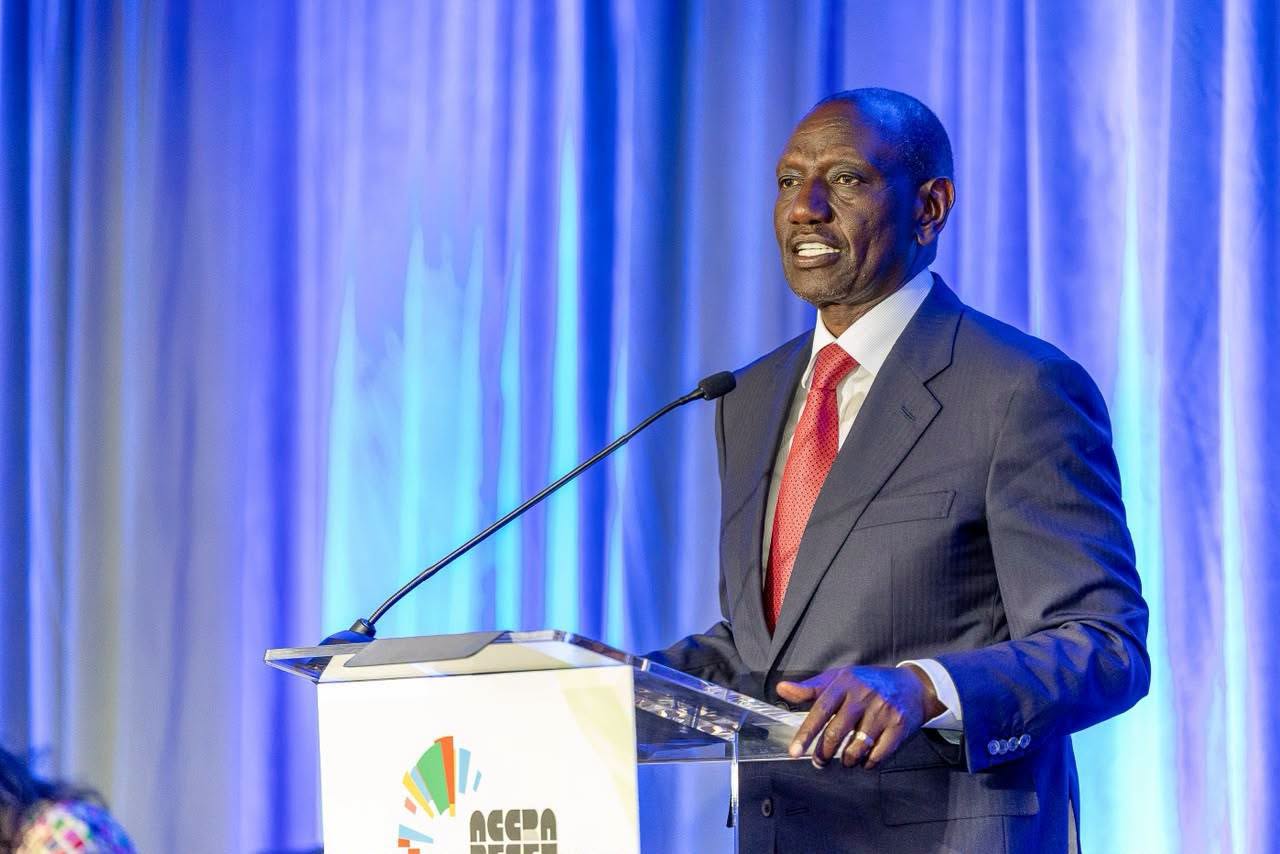
President William Ruto took Africa’s case for economic power, institutional influence and control over its development choices to the 81st United Nations General Assembly with more than US$4 trillion in African domestic capital, 1.5 billion people, 54 nations, vast energy resources and some of the world’s most strategically important minerals forming the economic weight behind his message. His engagements in New York presented a continent seeking to mobilise its own capital, finance infrastructure, expand industrial production, build artificial intelligence capabilities, process its resources and secure meaningful influence within the institutions that shape global finance, peace and security.
Africa’s economic proposition is backed by resources capable of supporting development on an immense scale. The continent holds more than US$4 trillion across domestic financial assets, including pension funds, insurance assets, sovereign resources, reserves and other pools of institutional capital. It produces approximately 10 million barrels of oil every day and possesses significant deposits of cobalt, copper, lithium, graphite, manganese, nickel and rare earth minerals required for batteries, electric mobility, renewable energy systems, electronics and advanced manufacturing. Its population of more than 1.5 billion people provides a substantial labour force, consumer market and expanding base of entrepreneurs, professionals and technology talent.
Ruto used UNGA 81 to place these assets within a coherent African development proposition centred on mobilising African money for African projects, attracting global investment into productive sectors, expanding local processing, financing cross-border infrastructure and building industries capable of creating employment at scale. Kenya featured prominently within this agenda through major infrastructure, energy, technology and investment propositions that can demonstrate the financing models being advocated for the continent.
- More than US$4 trillion in African domestic capital provides substantial financial capacity for the continent’s development agenda. African pension funds, insurance companies, sovereign investment institutions, banks, reserves and other financial assets control enormous pools of capital. Ruto’s proposition seeks to channel a meaningful share of these resources into infrastructure, energy, manufacturing, agriculture, technology and other productive investments. Achieving this requires bankable projects, credible investment vehicles, effective guarantees, strong governance and financial structures capable of giving institutional investors appropriate returns over long investment periods.
- Approximately US$90 billion spent annually on petroleum product imports demonstrates the scale of Africa’s energy market. Africa produces approximately 10 million barrels of crude oil every day while importing around 120 million metric tonnes of refined petroleum products annually. Building refining, storage, logistics and petrochemical capacity within Africa can direct a greater share of this expenditure into African industrial activity, employment, transport networks and supporting businesses. Energy security consequently formed an important component of the economic proposition advanced during Ruto’s New York engagements.
- The proposed East Africa Refinery gives the regional energy agenda a major industrial project around which investment can be mobilised. The proposed facility is envisaged at approximately 700,000 barrels of processing capacity per day, placing it among the largest industrial investments contemplated in the region. President Ruto’s engagements in New York included discussions involving Africa Finance Corporation President and Chief Executive Officer Samaila Zubairu and Nigerian industrialist Aliko Dangote. The refinery proposition reaches into storage, shipping, logistics, petrochemicals, transport infrastructure, construction, manufacturing and thousands of direct and indirect employment opportunities.
- Up to US$40 billion in infrastructure investment under Kenya’s financing programme provides an immediate demonstration of the capital mobilisation model being advanced for Africa. Kenya is developing financing structures intended to bring institutional, private, domestic and international capital into commercially viable infrastructure. Roads, energy systems, water infrastructure, transport networks and other productive assets require large amounts of patient capital. Mobilising these resources through investment structures creates an avenue for African pension funds, insurers, development finance institutions and international investors to participate in long-term projects capable of generating economic returns.
- A US$10 billion African artificial intelligence investment ambition places technology firmly within the continent’s development agenda. The AI 10 Billion Initiative seeks to mobilise up to US$10 billion by 2035 for computing infrastructure, skills, entrepreneurship, research, data systems and artificial intelligence applications across Africa. The initiative carries an ambition of supporting millions of employment opportunities while developing African participation in an industry that is rapidly influencing healthcare, agriculture, education, finance, manufacturing and public administration.
- Africa’s strategic minerals provide the raw material base for a major industrial opportunity. The continent possesses substantial deposits of cobalt, copper, lithium, manganese, graphite, nickel and rare earth elements required across the global technology and clean-energy economy. Processing these resources within Africa can support refineries, component manufacturing, battery value chains, industrial skills and associated infrastructure. Ruto’s wider economic argument places value addition within the continent’s development strategy so that African mineral resources support African industries and employment.
- Africa’s 1.5 billion people provide the market and human capital required to sustain investment at scale. The continent’s demographic profile creates expanding demand for housing, food, energy, transport, healthcare, education, financial services and digital products. This population also supplies the workforce required for manufacturing, technology, agriculture and services. Investment in skills, infrastructure and productive enterprise can convert this demographic scale into a significant source of economic growth and industrial capacity.
- Regional integration gives African infrastructure and industry access to a continental market. The African Continental Free Trade Area brings together 54 signatory countries and a market exceeding 1.4 billion people. Transport corridors, ports, power pools, digital networks and industrial investments gain greater economic relevance when they serve interconnected markets. Ruto’s investment agenda consequently links financing with regional infrastructure capable of moving energy, goods, services, capital and people across African economies.
Kenya’s role within this continental agenda gives the President an opportunity to demonstrate the proposition through projects at home while advocating financing reforms with application across Africa. Infrastructure financing, the proposed regional refinery, artificial intelligence investment, renewable energy, agriculture, manufacturing and diaspora capital provide practical areas through which the ideas presented in New York can move into implementation.
The economic weight behind Africa’s case also strengthens the political argument President Ruto carried into the General Assembly. Fifty-four African countries account for more than a quarter of UN membership, the continent is home to more than 1.5 billion people, and African states remain without permanent representation on the United Nations Security Council. Ruto’s UNGA address placed this institutional question alongside Africa’s economic agenda, making representation, financing and development part of the same demand for a global system in which the continent exercises influence consistent with its population, resources and economic potential.
Africa’s 54 Nations Take Their Demand for Global Power to the UN
Fifty-four African countries occupy more than a quarter of the 193 seats in the United Nations General Assembly, represent more than 1.5 billion people and remain without a single permanent seat on the institution entrusted with primary responsibility for international peace and security. That imbalance provided the political foundation of President William Ruto’s address to the 81st United Nations General Assembly, where he pressed Africa’s long-standing demand for permanent representation on the Security Council and placed the continent’s exclusion within a wider discussion about sovereign equality, institutional legitimacy and the distribution of global power.
The concentration of permanent Security Council authority among China, France, Russia, the United Kingdom and the United States means that five countries possess permanent membership and veto powers within an organisation comprising 193 sovereign states. Africa participates through elected seats whose occupants serve two-year terms, leaving the continent without permanent representation when decisions are made on sanctions, peacekeeping operations, international conflicts and other matters carrying major security and economic consequences. Ruto used this institutional structure to sharpen Africa’s case for reform and to demand representation that reflects the continent’s population, membership and responsibilities within the international system.
The historical foundations of the current arrangement strengthen Africa’s argument because the United Nations was established in 1945 when colonial rule still denied most African territories sovereign representation in international affairs. Decolonisation subsequently produced dozens of independent African states and transformed the composition of the General Assembly, eventually giving Africa 54 UN members. The Security Council’s permanent membership continued to comprise the five powers established under the post-war settlement, leaving the continent’s expanded political presence outside permanent membership of the organisation’s most powerful decision-making body.
Ruto’s argument drew its force from the circumstances under which the current structure was created. The United Nations was established in 1945 when colonial rule still covered much of Africa and hundreds of millions of people around the world lived in territories without sovereign representation. Most African countries had no independent governments participating in the negotiations that created the post-war international architecture. Decolonisation subsequently transformed the membership of the United Nations and brought dozens of independent African states into the organisation, creating a General Assembly whose composition bears little resemblance to the membership that existed when the Security Council was designed.
- Africa’s 54 countries account for approximately 28 per cent of the entire membership of the United Nations. This numerical weight gives the continent a substantial presence in the General Assembly and makes its absence from permanent Security Council membership a central issue in the reform debate. African governments participate in UN diplomacy, implement Security Council decisions, contribute personnel to peace operations and manage the consequences of conflicts affecting their territories and neighbouring states. Permanent representation would give the continent continuous participation in the Council’s highest level of decision-making.
- More than 1.5 billion Africans are represented in the international system without an African permanent member of the Security Council. Africa is home to close to one fifth of humanity, and its population is projected to continue expanding significantly during the coming decades. Decisions taken by the Council can affect peace operations, sanctions, humanitarian access and responses to conflicts involving African countries. Ruto used this demographic reality to strengthen the case for an institutional structure that recognises the scale of the population represented by African states.
- Five countries continue to hold permanent seats and veto authority within an organisation comprising 193 member states. The permanent members possess the ability to prevent the adoption of substantive Security Council resolutions through the veto. The other 188 UN member states do not possess an equivalent permanent power. Ruto placed this concentration of authority within his wider argument on sovereign equality and the need for international institutions to reflect contemporary geopolitical realities.
- Africa’s Common Position seeks at least two permanent seats and five non-permanent seats on the Security Council. This demand has been articulated through the Ezulwini Consensus and the Sirte Declaration, which established the continent’s collective position on UN reform. Africa has maintained that the permanent seats should carry the privileges attached to permanent membership while the veto remains part of the Security Council system. The demand represents an agreed continental position pursued through the African Union and African diplomacy over two decades.
- The Security Council has already been expanded once, establishing a historical basis for institutional change. The Council began with 11 members, including six elected members alongside the five permanent members. Growth in UN membership led to an amendment of the Charter that expanded the Council to 15 members, increasing the elected seats to 10. The amendment entered into force in 1965. Africa’s current reform agenda consequently concerns another adjustment to an institution that has previously been changed in response to the evolving composition of the United Nations.
The urgency of Ruto’s argument was reinforced by the scale of armed conflict confronting the international system. His address cited 65 state-based armed conflicts recorded in 2025, the highest number documented in the period covered by the conflict data he referenced. Thirteen reached the intensity classified as war, while organised violence claimed close to a quarter of a million lives. The growth of interstate conflict, civilian deaths and displacement has placed immense pressure on humanitarian systems and exposed the economic consequences that insecurity can transmit across national borders.
Africa experiences these consequences through conflicts in Sudan, the Sahel, the Horn of Africa, eastern Democratic Republic of Congo and other areas where violence has displaced populations, disrupted agriculture, damaged infrastructure and weakened economic activity. Conflict consumes public resources that could finance schools, hospitals, roads, electricity and productive enterprise. It also disrupts regional trade corridors and investment while increasing humanitarian expenditure and creating long-term reconstruction requirements.
Ruto consequently framed peace as an economic necessity alongside its human and security dimensions. Africa’s infrastructure and industrial ambitions require stable states, functioning trade corridors and predictable investment environments. Capital required for factories, power plants, transport networks and technology infrastructure is difficult to mobilise where conflict creates persistent uncertainty. The President’s demand for African influence in international peace and security decisions therefore sits directly within the continent’s development agenda.
- African peace operations give the continent a direct stake in the decisions made at the United Nations. African countries contribute military personnel, police officers and civilian expertise to international and regional peace missions while also financing and leading African Union security operations. These deployments expose African personnel and governments to the operational consequences of international security decisions. Permanent representation would place African perspectives within the Council continuously as mandates, sanctions and responses to crises are negotiated.
- Conflict destroys the productive assets required for development. Roads, electricity infrastructure, hospitals, schools, farms and businesses can take years and billions of dollars to build and can be damaged within days of intense fighting. Displacement removes workers and entrepreneurs from productive activity, interrupts education and increases pressure on public services in receiving communities. Ruto’s security argument therefore connects institutional reform with the protection of investments Africa is making in its people and physical infrastructure.
- Regional instability can affect several economies through shared transport, energy and trade networks. African integration increasingly depends on cross-border infrastructure and commercial corridors. Violence affecting a strategic road, railway, port or border crossing can interrupt the movement of goods across several countries. The economic cost of insecurity consequently extends across regional markets and strengthens the case for African participation in the institutions responsible for international security.
Ruto also challenged the length of time taken to translate international recognition of Africa’s underrepresentation into institutional reform. Formal intergovernmental negotiations on Security Council reform have continued since 2009, covering representation, permanent membership, the veto, regional balance, Council size and working methods. Africa has maintained a common position throughout much of this process and continues to seek permanent representation.
The reform question has acquired additional significance as the world confronts changes in population, economic activity, technology, security and geopolitical influence. Africa’s population has expanded rapidly, its continental market is taking shape under the African Continental Free Trade Area, its minerals have become increasingly important to global technology and energy supply chains, and its renewable energy resources are attracting international investment. These developments give the continent growing strategic relevance within decisions extending from climate and energy security to artificial intelligence and critical minerals.
Ruto’s message in New York placed Africa’s demand for political power alongside the economic proposition he advanced throughout UNGA 81. A continent mobilising more than US$4 trillion in domestic capital, developing regional infrastructure, seeking US$10 billion for artificial intelligence and building integrated markets also seeks a permanent voice within the institution responsible for the world’s most consequential peace and security decisions.
That demand for representation formed one pillar of Ruto’s UNGA agenda. The next pillar addressed the global financial system and the price Africa pays for capital, where debt servicing, credit assessments, financing costs and access to long-term development finance have become central to the continent’s ability to turn its resources into roads, energy, industries, jobs and economic growth.
The US$4 Trillion Question Ruto Put Before the World
A continent holding more than US$4 trillion in domestic financial resources should have the capacity to finance a meaningful share of the infrastructure and industries required by its 1.5 billion people, and President William Ruto used that figure in New York to move Africa’s development financing debate towards the money already held by Africans themselves. Pension funds, insurance companies, commercial banks, sovereign investment institutions and central banks control vast pools of African capital, creating an opportunity to finance electricity, transport, water, agriculture, manufacturing and technology through investment structures capable of protecting savings while generating long-term economic returns.
The significance of Ruto’s US$4 trillion argument reaches directly into Africa’s unfinished infrastructure and industrial agenda because capital locked in financial assets can become roads connecting producers to markets, transmission lines carrying electricity to factories, irrigation systems supporting commercial agriculture, data centres powering digital economies and processing plants retaining value from African minerals. Mobilising even a carefully structured share of these resources would create a substantial African source of development finance and give domestic institutional investors a direct financial stake in productive assets across the continent.
Pension and insurance institutions occupy a particularly important position within that opportunity because they collectively hold more than US$1 trillion and manage money with long investment horizons. Infrastructure also operates across long horizons, with power plants, ports, railways, water systems and transmission networks generating economic value over several decades. Ruto’s financing proposition seeks to connect these two realities through professionally structured investment vehicles, credible projects, guarantees and capital markets capable of moving long-term African savings into long-term African assets.
Hundreds of billions of dollars held in central-bank reserves and substantial assets managed by banks, sovereign funds and other financial institutions deepen the pool available across the continent. Unlocking that capital requires governments to produce projects capable of passing rigorous commercial, technical and governance tests, because institutional investors carry obligations to the citizens, pensioners and policyholders whose money they manage.
Ruto’s proposition in New York sought to place Africa’s financial resources at the centre of the solution while mobilising additional capital through multilateral development banks, institutional investors and private markets. The President argued for financing structures capable of converting African savings into productive assets, supported by guarantees, credible projects and stronger financial institutions.
- More than US$4 trillion in African domestic financial resources gives the continent a substantial pool of capital from which to finance development. These resources are spread across pension funds, insurance companies, commercial banks, sovereign investment institutions, foreign exchange reserves and other financial assets. Pension and insurance assets alone exceed US$1 trillion, while African central banks collectively hold hundreds of billions of dollars in reserves. Ruto’s agenda seeks to create mechanisms capable of directing a greater share of this money into African infrastructure and productive enterprises while maintaining the investment safeguards required by institutions managing citizens’ savings.
- Africa’s infrastructure requirements create an investment pipeline capable of absorbing large pools of long-term capital. Reliable electricity, efficient transport systems, water security, irrigation, digital connectivity and industrial infrastructure determine the productive capacity of an economy. Financing these assets creates economic activity during construction and establishes the foundations required by businesses for decades. Ruto’s argument positions infrastructure as an investable asset class capable of attracting pension funds, insurers, development finance institutions, sovereign investors and global private capital when projects are structured around credible revenues and appropriate risk allocation.
- Multilateral development banks have an important role in expanding the amount of capital available to African economies. Institutions including the World Bank and the African Development Bank can provide long-term financing, guarantees and risk-sharing instruments capable of supporting projects whose scale exceeds the financing capacity of individual governments. Ruto has advocated stronger use of the balance sheets of these institutions so that every dollar of development capital can mobilise additional private and institutional investment into productive projects.
- Guarantees can unlock private capital by addressing risks that prevent viable African projects from reaching financial close. Institutional investors assess political risk, currency exposure, project revenues, regulatory certainty and the ability of contractual parties to meet their obligations. Credit enhancement, partial-risk guarantees and political-risk insurance can address specific elements of that risk profile. The resulting financing structures can expand the pool of investors able to participate in African infrastructure and reduce the amount of capital governments must provide directly.
- Local-currency financing has become an important component of Africa’s long-term investment agenda. Infrastructure projects frequently generate revenues in local currencies while international financing may be denominated in dollars, euros or other foreign currencies. Significant exchange-rate movements can increase debt-service costs even when the underlying project continues performing. Stronger African capital markets, domestic bond markets and local-currency lending institutions can provide additional financing channels aligned with the currencies in which projects generate their revenues.
- Longer financing tenors can align debt repayment with the economic life of infrastructure. A power plant, railway, road or water system may operate for several decades and generate economic value throughout that period. Financing structures with appropriate maturities allow repayment obligations to be distributed across the years in which the asset produces revenue and economic benefits. Ruto’s push for patient capital therefore addresses one of the central requirements of large-scale infrastructure development.
The President also placed responsibility on African governments to create the conditions required to attract and protect capital. More financing requires stronger project preparation, credible procurement, enforceable contracts, effective institutions, transparent public finances and disciplined debt management. Investors committing retirement savings, insurance assets or institutional funds to projects require confidence that contracts will be honoured and revenues managed within predictable legal and regulatory frameworks.
This domestic responsibility carries particular significance for the Africa-financing-Africa agenda because pension funds and insurance assets represent the savings of African citizens. Mobilising those resources for development requires investments capable of preserving capital and producing appropriate risk-adjusted returns. The proposition consequently depends on professionally managed investment vehicles, rigorous project appraisal and governance structures capable of insulating investment decisions from inappropriate political interference.
- Bankable projects form the bridge between Africa’s financial resources and its development requirements. Capital cannot finance an ambition that has not been translated into a technically, legally and commercially viable project. Feasibility studies, environmental assessments, demand projections, revenue models, land arrangements, procurement structures and regulatory approvals must be developed before institutional investors can commit significant funds. Strengthening project preparation therefore becomes as important as mobilising the money itself.
- Domestic capital markets provide a mechanism for African savings to finance African assets. Bonds, infrastructure funds, listed investment vehicles and other instruments can connect institutional investors with projects requiring long-term capital. Deeper markets also create opportunities for citizens and domestic institutions to participate in economic assets within their own countries and regions.
- Public private partnerships provide another route for bringing private capital and expertise into infrastructure. Well-structured PPPs can allocate construction, financing, operational and demand risks to the parties capable of managing them. The approach requires strong project preparation, transparent procurement, fiscal oversight and enforceable contracts because governments retain responsibilities that can create long-term financial obligations. Kenya’s expanding use of PPP structures formed part of the investment proposition presented during the President’s engagements.
Kenya’s own financing agenda gave the President practical projects through which to demonstrate the approach he was advocating for Africa. The country is developing a National Infrastructure Fund and a Sovereign Wealth Fund while pursuing private and institutional investment across transport, energy, water, housing, agriculture and other productive sectors. The government has identified an infrastructure investment ambition reaching approximately US$40 billion over the coming decade, creating a substantial pipeline through which domestic and international capital can participate in Kenya’s development programme.
Ruto’s wider African proposition seeks to replicate the underlying financing logic across a continent whose development requirements are measured in trillions of dollars. African pension funds can participate in infrastructure funds. Development banks can provide guarantees. Governments can prepare investable projects. International investors can provide additional capital and expertise. Regional markets can provide the demand required to sustain large industrial and infrastructure investments. African savings can consequently become an active component of the continent’s development financing architecture.
The financial agenda Ruto carried to New York ultimately concerns Africa’s capacity to turn wealth into productive power. The continent already possesses substantial financial assets, natural resources, a rapidly growing population and an expanding market. Converting those advantages into electricity, roads, factories, irrigation, digital infrastructure, processing facilities and jobs requires capital to move from financial balance sheets into carefully structured productive investments.
That financing proposition leads directly into one of the most consequential areas of Ruto’s UNGA 81 engagements, where Africa’s abundant energy resources, strategic minerals and growing demand were presented as the foundation for a new phase of industrialisation capable of retaining greater economic value on the continent.
Turning Africa’s Resources Into African Industry
Africa’s annual expenditure of approximately US$90 billion on around 120 million metric tonnes of imported petroleum products provides one of the clearest economic cases behind President William Ruto’s push for a new phase of African industrialisation. The continent produces approximately 10 million barrels of crude oil every day and possesses extensive renewable-energy resources alongside minerals essential to batteries, electricity networks, electric vehicles and advanced technologies. Ruto’s engagements at UNGA 81 placed these resources within an investment agenda seeking to expand refining, mineral processing, manufacturing, energy generation and regional infrastructure so that a greater share of the economic activity generated by African resources takes place within African economies.
Building industrial capacity around Africa’s energy resources would create economic activity extending far beyond the production of crude oil, minerals and electricity. Refineries require storage terminals, pipelines, marine facilities, engineering services and distribution networks, while mineral-processing plants require electricity, water, transport infrastructure, laboratories and skilled workers. Manufacturing facilities create demand for suppliers, logistics companies, professional services and technology. Ruto’s wider investment proposition therefore links natural resources with infrastructure and finance because the economic value of Africa’s resource endowment depends heavily on the productive industries developed around it.
- Africa’s approximately US$90 billion annual petroleum import bill provides an established market for investment in refining and associated industries. Demand for petrol, diesel, aviation fuel, liquefied petroleum gas and other petroleum products already exists across African economies at significant scale. Expanding refining capacity within the continent can support engineering, construction, storage, logistics, transport and petrochemical industries while developing regional supply chains capable of serving this existing market.
- The proposed East Africa Refinery with approximately 700,000 barrels of daily processing capacity would give the region a major industrial asset around which additional investment could develop. President Ruto’s New York engagements included discussions involving Africa Finance Corporation President and Chief Executive Officer Samaila Zubairu and Nigerian industrialist Aliko Dangote around the refinery proposition. Developing a facility of this scale would require substantial supporting infrastructure covering storage, shipping, transport, utilities and distribution while generating opportunities across construction, engineering, maintenance, logistics and professional services.
- Africa’s position within the global minerals economy gives the continent an opportunity to build industries serving rapidly expanding technology and energy value chains. The Democratic Republic of Congo occupies a central position in global cobalt production and possesses major copper resources, Zambia has an established copper industry, Zimbabwe holds significant lithium resources, Guinea possesses extensive bauxite deposits, and graphite, manganese, nickel and rare earth resources occur across several African economies. These materials are required for electricity networks, batteries, electric vehicles, renewable-energy technologies, electronics and industrial equipment.
- Developing processing capacity around Africa’s mineral resources can create additional layers of economic activity within mining economies and their regional markets. Refineries, smelters and processing facilities require engineers, technicians, laboratories, transport services, electricity and industrial inputs, creating opportunities for local enterprises and skilled employment. Further investment in component manufacturing can deepen these value chains and connect mineral-producing economies with industries supplying the global energy and technology markets.
Africa’s ability to process minerals and expand manufacturing depends substantially on access to reliable electricity, making energy development an integral component of the industrialisation programme. The continent possesses approximately 60 per cent of the world’s best solar resources and significant wind, hydroelectric and geothermal potential, creating an extensive renewable-energy base that can support households, factories, mines, processing plants and digital infrastructure when matched with investment in generation, transmission and storage.
Kenya provides a practical illustration of the industrial possibilities associated with renewable electricity because geothermal energy already contributes significantly to the national power system and additional prospects remain available for development. Resources in areas including Suswa, Paka and Silali can contribute further generation capacity as investment progresses, while expanded transmission infrastructure can deliver electricity to industrial areas, businesses and households. Linking new generation directly with productive demand can strengthen the commercial viability of energy projects while supporting manufacturing, mineral processing and emerging digital industries.
Regional electricity integration can extend the economic value of these investments across national borders because large generation projects become capable of serving several markets through interconnected transmission systems. African power pools and cross-border interconnectors can allow countries with abundant generation resources to supply electricity to neighbouring economies, creating larger markets for power producers and improving access to electricity required by industries operating across regional production networks.
Agriculture forms another major component of the industrial opportunity because increasing farm production creates demand throughout an extensive chain of economic activities covering fertiliser, machinery, irrigation equipment, storage, cold chains, packaging, transport and food processing. Africa’s population of more than 1.5 billion people provides a substantial domestic food market, while regional trade creates opportunities for agricultural production in one country to supply processors and consumers across neighbouring economies. Investment in irrigation and agro-processing can consequently turn increased agricultural output into manufacturing activity and employment throughout rural and urban economies.
The African Continental Free Trade Area provides the commercial framework required for these industries to serve markets extending beyond individual national economies. The agreement brings together a market exceeding 1.4 billion people and creates an opportunity for manufacturers, processors and service providers to structure investments around continental and regional demand. Efficient border systems, harmonised standards, reliable transport corridors and improved logistics will determine the extent to which businesses can use that market to achieve the scale required for major industrial investments.
Africa’s more than US$4 trillion in domestic financial resources gives the industrialisation agenda a substantial pool of capital that can participate alongside development finance institutions and international investors. Pension funds, insurers, banks, sovereign investment institutions and other African asset holders require investable projects capable of generating sustainable returns, while industrial projects require patient capital capable of financing infrastructure and productive facilities over long periods. Connecting these two requirements formed an important part of the financing proposition Ruto advanced in New York.
Artificial intelligence adds another industrial frontier because data centres, cloud infrastructure and advanced computing require substantial electricity, fibre connectivity, specialised facilities and highly skilled workers. The proposed US$10 billion African AI investment drive can therefore complement the continent’s energy and infrastructure agenda by building computing capacity and technology enterprises while creating demand for reliable renewable electricity. Africa’s participation in artificial intelligence consequently becomes part of a wider industrial strategy encompassing physical infrastructure, energy, human capital and digital production.
Ruto’s UNGA 81 agenda brought these elements together around a continental proposition in which African capital finances productive assets, energy supports industry, infrastructure connects regional markets, minerals feed processing and manufacturing, agriculture supplies agro-industry and technology raises productivity across economic sectors. Translating that proposition into measurable economic gains now depends on the investment agreements, financing partnerships, technology collaborations and implementation commitments emerging from the President’s engagements in New York.
Africa Stakes Its Claim in the Artificial Intelligence Economy
Artificial intelligence is rapidly reshaping global investment, employment, education, healthcare, financial services, agriculture and public administration, creating an economic transformation in which access to computing power, electricity, data, skills and capital will determine where much of the resulting value is created. President William Ruto used his engagements in New York to position Africa within that transformation through an agenda seeking up to US$10 billion for the continent’s AI ecosystem, stronger computing infrastructure, investment in African talent and international technology partnerships capable of building productive capacity on the continent.
Africa enters the AI era with a population exceeding 1.5 billion people, a predominantly young demographic profile and an expanding digital economy that provides a substantial foundation for technology adoption and innovation. The continent also faces infrastructure constraints in electricity, computing capacity, connectivity and specialised skills that require significant investment. Ruto’s agenda therefore placed physical infrastructure alongside software and innovation, recognising that meaningful participation in artificial intelligence requires data centres, high-performance computing, reliable power, fibre networks, research institutions and people equipped to develop and deploy advanced technologies.
The AI 10 Billion Initiative gives that ambition a measurable financing target by seeking to mobilise up to US$10 billion by 2035 for Africa’s artificial intelligence ecosystem. The investment agenda covers infrastructure, skills, innovation, research and enterprise development, creating a framework through which African governments, development finance institutions, technology companies and private investors can participate in building the capabilities required for the continent’s AI economy.
- The US$10 billion financing ambition places capital behind Africa’s effort to build its own artificial intelligence capabilities. Computing infrastructure requires substantial upfront investment in specialised hardware, data centres, cloud systems, electricity and connectivity. Financing research institutions, start-ups, skills development and locally relevant AI applications adds further capital requirements. Mobilising investment at scale can help African countries establish the infrastructure required to develop and deploy technology within their own economies.
- An ambition to support up to 40 million jobs gives the AI initiative a direct connection to Africa’s employment challenge. The continent’s rapidly expanding working-age population requires economies capable of creating millions of productive opportunities in technology and in sectors transformed by technology. AI skills can support software development, financial services, healthcare, agriculture, education, logistics, manufacturing and public administration, while investment in digital enterprises can create new businesses serving African and international markets.
- President Ruto’s AI Middle Powers Initiative with Finnish President Alexander Stubb seeks to build cooperation around computing, data, skills and governance. The initiative creates a platform through which participating countries can collaborate on technological capabilities and approaches to artificial intelligence. Kenya’s participation places the country within international discussions concerning the infrastructure, standards and governance systems that will influence the development of AI.
- Kenya’s engagement with Anthropic adds a direct technology partnership to the New York programme. Cooperation discussed around artificial intelligence covers areas including skills, capacity building, research, safety and practical applications in sectors such as education and healthcare. Building domestic expertise through partnerships with technology companies can strengthen Kenya’s ability to deploy AI while developing the human capabilities required to participate in its creation and governance.
Africa’s energy resources also become strategically important within this technology agenda because advanced computing and data centres consume substantial quantities of electricity. The continent possesses approximately 60 per cent of the world’s best solar resources alongside significant geothermal, wind and hydropower potential. Developing computing infrastructure close to abundant renewable electricity creates an opportunity to connect Africa’s energy endowment with an expanding global demand for digital processing capacity.
Kenya’s geothermal resources give the country a particularly relevant position within this conversation because geothermal electricity can provide continuous power required by data centres and other energy-intensive digital infrastructure. Continued investment in generation, transmission and fibre connectivity can create conditions for additional computing capacity while supporting the wider digital economy.
Agriculture provides another area where artificial intelligence can produce measurable economic value across Africa because farmers and governments increasingly require accurate information on weather, pests, soils, markets and production. AI combined with satellite observation, climate data and digital platforms can strengthen forecasting, improve agricultural decision-making and help governments prepare for climate shocks affecting food production.
Healthcare and education also provide large potential markets for African AI applications because rapidly growing populations are increasing demand for services while shortages of specialised personnel persist in many areas. Digital diagnostic support, administrative automation, personalised learning tools and improved information systems can expand the capacity of existing institutions when deployed within appropriate professional, regulatory and safety frameworks.
Ruto’s technology agenda in New York consequently placed artificial intelligence within Africa’s wider economic transformation rather than treating it as a stand-alone digital programme. The US$10 billion investment ambition connects computing infrastructure with energy, skills, employment, research and enterprise development, giving the continent an opportunity to build technological capability alongside the physical infrastructure and industries required for its broader development.
The value of these engagements will ultimately be measured by the investments, partnerships, financing commitments and implementation pathways that continue after the UNGA meetings conclude. That makes the next stage of the article critical because the President’s bilateral meetings and investment engagements provide the clearest picture of what Africa and Kenya may actually carry home from New York.
What Africa and Kenya Bring Home From UNGA 81
The value of President William Ruto’s five-day mission to New York ultimately rests on what survives the speeches, roundtables and high-level meetings and moves into financing, investment, technology, markets and institutional reform. UNGA 81 gave the President a platform to advance Africa’s interests before world leaders and global institutions while pursuing specific opportunities for Kenya across energy, infrastructure, artificial intelligence, diaspora investment and development finance. Several engagements produced concrete frameworks and advanced projects, while major investment propositions moved closer to implementation and now require sustained follow-through.
The gains emerging from New York extend across two levels because Ruto pursued Kenya’s national economic interests alongside a continental agenda covering African capital, artificial intelligence, global financial reform and permanent African representation within the United Nations Security Council. This approach gave Kenya direct investment opportunities while using the country’s diplomatic platform to advance issues affecting Africa’s 54 nations and more than 1.5 billion people.
- The proposed KES 2.2 trillion East Africa Refinery moved from an investment proposition into direct financing and implementation discussions involving major prospective partners. President Ruto met Dangote Industries President Aliko Dangote and Africa Finance Corporation President and Chief Executive Officer Samaila Zubairu in New York to discuss financing and final preparations for the planned Lamu facility. The refinery is designed for approximately 700,000 barrels of crude oil per day and is projected by the government to support more than 60,000 jobs across its wider economic ecosystem. The engagement is significant because it brought the government, a major African industrial investor and a continental infrastructure financier into the same discussion ahead of the planned groundbreaking on September 30, 2026. Financing arrangements and subsequent implementation will determine the eventual economic value delivered by the project.
- The Kenya Diaspora Impact Platform moved the diaspora agenda towards a structured investment framework backed by a formal declaration of intent. The platform was unveiled in New York during President Ruto’s engagement with Kenyans living in the United States, accompanied by a Joint Declaration of Intent involving the Government of Kenya, the United Nations and Equity Group Holdings. The initiative seeks to channel diaspora capital, expertise and professional networks into productive investment opportunities. Kenya received approximately US$5.04 billion in formal remittances during 2025, giving the platform a substantial financial constituency from which investment can potentially be mobilised into businesses and development projects.
- Africa’s US$10 billion artificial intelligence ambition received high-level political advocacy through the UNGA platform. Ruto advanced the African Development Bank-backed AI 10 Billion Initiative, which seeks to mobilise up to US$10 billion by 2035 for computing infrastructure, skills, innovation and enterprise across the continent. He also co-led the AI Middle Powers Initiative with Finnish President Alexander Stubb, placing cooperation on computing resources, data and talent within a wider international framework. The immediate gain lies in building political and institutional partnerships around Africa’s AI infrastructure requirements, while actual capital mobilisation will determine the scale of implementation achieved over the coming years.
- Kenya strengthened its position within international discussions shaping artificial intelligence governance and application. Engagements during UNGA covered AI investment, infrastructure, skills and applications across healthcare, education and financial services, while Kenya participated in initiatives addressing the safety of children in an increasingly AI-driven digital environment. These engagements give the country an opportunity to participate in the development of international frameworks while building partnerships required to strengthen domestic technological capability.
- Africa’s more than US$4 trillion capital proposition gained an international platform connecting investors, governments and financial institutions. Ruto used the Africa We Build High-Level Roundtable and other engagements to challenge regulations, risk assessments and investment structures that constrain the movement of African savings into African projects. He highlighted more than US$2 trillion in domestic non-bank capital pools, including more than US$1 trillion held by pension and insurance institutions. The gain from New York lies in moving the Africa-financing-Africa proposition into direct conversations with institutions capable of changing investment rules, providing guarantees and structuring projects that can absorb long-term African capital.
- Kenya offered itself as a practical test case for reforming the assessment of African investment risk. Ruto proposed opening Kenyan default and recovery data for scrutiny as part of an evidence-based examination of the methodologies used to price African risk. The initiative addresses an issue with direct implications for the cost of capital because risk assessments influence the interest rates, guarantees and returns demanded by investors. Demonstrating actual credit performance through transparent data can contribute to a wider African effort to improve the evidence used in investment and financing decisions.
- Africa’s demand for permanent representation on the UN Security Council was placed directly before the General Assembly as a central reform priority. Ruto used Kenya’s national address to press the case of Africa’s 54 countries and more than 1.5 billion people, calling for equitable permanent representation carrying the prerogatives and privileges attached to permanent membership. Institutional reform requires negotiations among UN member states and cannot be delivered by a single General Assembly address, while sustained advocacy at this level keeps the Common African Position within the international reform agenda.
- Kenya strengthened the connection between its infrastructure programme and international pools of capital. The President used UNGA engagements to promote an infrastructure financing agenda targeting up to US$40 billion through mechanisms intended to attract institutional and private investment into productive assets. The significance of the New York meetings lies in presenting projects and financing structures directly to institutions controlling long-term capital while advancing the wider argument that African pension, insurance and investment assets can participate in financing African infrastructure.
The strongest gains from UNGA 81 consequently lie in the combination of projects advanced, partnerships established and African priorities elevated within international decision-making forums. The Lamu refinery entered direct discussions involving Dangote Industries and the Africa Finance Corporation, the Diaspora Impact Platform was formally unveiled with institutional partners, Africa’s US$10 billion AI investment ambition gained high-level advocacy, Kenya offered concrete data to challenge the pricing of African risk, and the continent’s demand for permanent Security Council representation was delivered directly to the 193-member General Assembly.
The next phase will determine the economic weight of these gains because financing must reach financial close, investment platforms must mobilise actual capital, AI initiatives must produce infrastructure and skills, and diplomatic advocacy must generate institutional decisions. Kenya’s responsibility after New York is to convert the relationships and frameworks secured during UNGA 81 into projects, capital and jobs, while Africa’s wider task is to sustain the push for financial and governance reforms capable of translating the continent’s resources into economic and political influence.
What Africa and Kenya Bring Home From UNGA 81
Kenya emerged from President William Ruto’s UNGA 81 engagements with major investment projects pushed deeper into financing discussions, a new framework for mobilising diaspora capital, expanded technology partnerships and fresh international engagement around an infrastructure pipeline running into tens of billions of dollars. The New York mission placed the proposed East Africa Refinery before major African financiers and investors, opened new channels for directing Kenya’s US$5.04 billion annual diaspora remittances into productive investment and positioned the country within a US$10 billion African artificial intelligence drive. These gains now enter the critical implementation phase in which financing, investment decisions and signed commitments must translate into projects, businesses and employment.
- East Africa Refinery moved into high-level financing and implementation discussions involving Africa Finance Corporation and Aliko Dangote around the proposed 700,000-barrel-per-day facility.
- US$10 billion African AI ambition gained international momentum through the AI 10 Billion Initiative and Ruto’s engagement with global technology and political leaders.
- More than US$4 trillion in African capital was placed firmly on the international investment agenda as Ruto pushed for African savings to finance infrastructure and productive industries across the continent.
- Diaspora investment gained a structured vehicle through the Kenya Diaspora Impact Platform, building on the US$5.04 billion Kenya received in formal remittances in 2025.
- Infrastructure financing received further international exposure as Kenya presented an investment pipeline targeting up to US$40 billion in capital for productive infrastructure.
- Africa’s global representation received renewed high-level advocacy as Ruto pressed the case for permanent Security Council representation for a continent of 54 countries and more than 1.5 billion people.
New York has given Kenya projects to advance, investors to pursue and partnerships to operationalise, while Africa leaves with its US$4 trillion capital proposition, US$10 billion AI ambition and demand for permanent global representation firmly on the international agenda. The work now shifts to converting that momentum into financing agreements, construction sites, technology infrastructure, industries and jobs across Kenya and the continent.